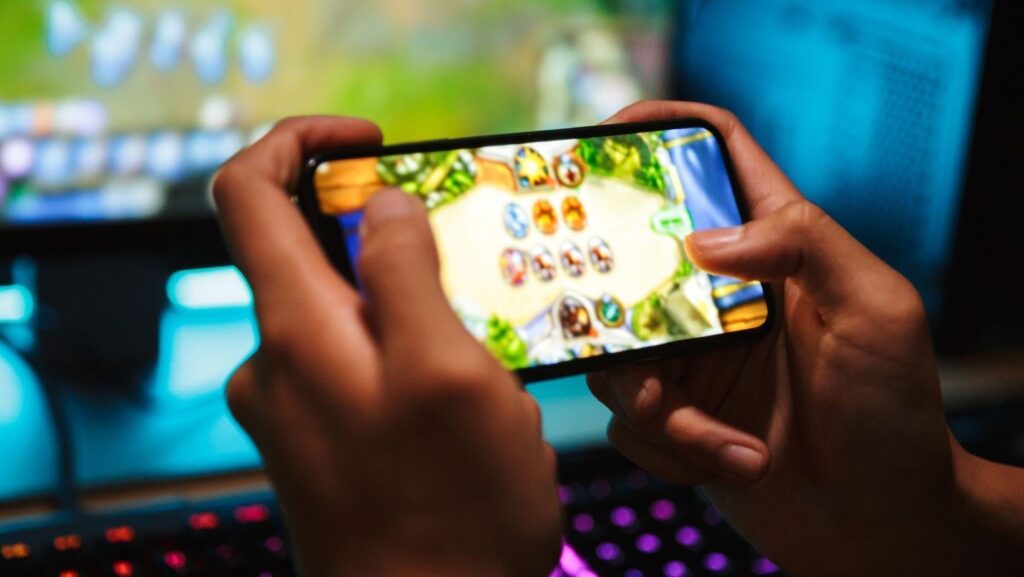
The mobile gaming industry has evolved rapidly over the last decade. From simple puzzle games to cloud-powered multiplayer experiences with console-quality graphics, mobile gaming now represents one of the largest sectors in global entertainment. As developers continue to push the boundaries of realism, connectivity, and immersion, attention is already turning toward the next major leap in wireless technology: 6G.
While 5G is still being rolled out across many parts of the world, researchers and technology companies are actively developing 6G networks, which are expected to arrive commercially in the 2030s. The question is no longer whether 6G will happen, but how dramatically it could reshape industries that depend heavily on speed and connectivity, especially mobile gaming.
What Is 6G?
6G refers to the sixth generation of wireless communication technology. It is expected to deliver significantly faster speeds, ultra-low latency, greater reliability, and enhanced artificial intelligence integration compared to 5G. While exact specifications are still under development, experts predict that 6G could support data rates up to 100 times faster than current 5G networks.
More importantly for gaming, 6G aims to reduce latency to almost imperceptible levels. Latency is the delay between a player’s action and the server’s response. In competitive gaming, even milliseconds matter.
This technological advancement could fundamentally change how games are developed, streamed, and experienced on mobile devices. It could have a transformative effect for those who enjoy playing puzzle, console and mobile slot games on their device.
The Rise Of Cloud Gaming
One of the biggest areas where 6G could make an impact is cloud gaming. Currently, cloud gaming services allow users to stream games directly from remote servers instead of relying on the hardware capabilities of their smartphones.
Although 5G improved cloud gaming performance considerably, issues such as inconsistent speeds, lag spikes, and network congestion still affect gameplay quality. 6G could solve many of these problems by offering near-instantaneous communication between devices and servers.
This means players may no longer need expensive gaming phones with powerful processors. Instead, lightweight devices could stream graphically intensive games effortlessly, similar to how users currently stream movies or music.
For game publishers, this could expand the market dramatically by making high-end gaming accessible to more users worldwide.
Enhanced Multiplayer Experiences
Modern mobile games increasingly rely on real-time multiplayer systems. Battle royale games, esports titles, and open-world multiplayer games all require stable, high-speed connectivity.
6G could enable:
- Massive multiplayer environments with thousands of simultaneous players
- Faster matchmaking systems
- Smoother real-time interactions
- Reduced lag during competitive gameplay
- Improved voice and video communication between players
As latency approaches near-zero levels, developers may create entirely new genres of games that depend on split-second responsiveness. Competitive mobile esports could become even more sophisticated and widely accepted alongside PC and console esports.
Augmented Reality And Mixed Reality Gaming
Augmented reality (AR) gaming gained mainstream attention with games like Pokémon GO, but technical limitations have prevented AR from reaching its full potential.
6G could dramatically improve AR and mixed reality gaming by supporting faster environmental data processing and real-time rendering. This may lead to immersive experiences where digital objects interact seamlessly with the physical world.
Imagine multiplayer AR games with real-time holographic interactions across cities, or immersive strategy games layered over real-world environments with virtually no delay.
The combination of 6G, wearable devices, and artificial intelligence could transform mobile gaming into something far more interactive than traditional touchscreen gameplay.
Artificial Intelligence Integration
6G networks are expected to integrate AI directly into network infrastructure. For mobile gaming, this could lead to highly personalised experiences.
AI-powered systems may dynamically adjust graphics quality, optimise server performance, predict player behaviour, and reduce network congestion automatically. Games could become smarter and more adaptive in real time.
NPCs (non-playable characters) may also become more realistic due to cloud-based AI processing powered by ultra-fast networks.
Challenges And Concerns
Despite its potential, 6G will not instantly revolutionise mobile gaming overnight. Several challenges remain.
Infrastructure Costs
Building 6G infrastructure will require enormous investment from governments and telecommunications companies. Global deployment may take years, especially in developing regions.
Device Compatibility
New smartphones and gaming hardware capable of supporting 6G will likely be expensive initially. Widespread adoption may take time as consumers gradually upgrade devices.
Data Privacy And Security
As gaming becomes increasingly cloud-based and AI-driven, concerns surrounding cybersecurity, user privacy, and data ownership may intensify.
Battery Consumption
Ultra-fast wireless communication and advanced gaming features may increase battery demands unless manufacturers make major improvements in energy efficiency.
Opportunities For Developers And Publishers
For developers, 6G could remove many current technical limitations. Studios may design larger open worlds, deliver console-quality graphics on mobile devices, and create persistent online universes with minimal loading times.
Publishers may also benefit from new monetisation opportunities through cloud subscriptions, live-service gaming, and immersive advertising experiences.
Independent developers could gain easier access to advanced cloud-based development tools without requiring expensive hardware infrastructure.
Could 6G Replace Traditional Gaming Platforms?
Although 6G may dramatically enhance mobile gaming, it is unlikely to completely replace PCs and consoles in the near future. Dedicated gaming systems still offer advantages in performance, customisation, and immersive experiences.
However, the gap between mobile and traditional gaming platforms may shrink considerably. As smartphones become more powerful and networks become faster, mobile devices could emerge as the primary gaming platform for millions of users worldwide.
Final Thoughts
The introduction of 6G has the potential to transform the mobile gaming industry in ways that extend far beyond faster download speeds. From cloud gaming and immersive AR experiences to AI-driven personalisation and near-zero latency multiplayer gaming, 6G could redefine what mobile gaming looks like in the coming decade.
While challenges surrounding infrastructure, affordability, and security remain, the long-term possibilities are substantial. If 5G helped mobile gaming evolve, 6G may fundamentally reinvent it.
For gamers, developers, and publishers alike, the arrival of 6G could mark the beginning of a new era where mobile gaming becomes more immersive, accessible, and technologically advanced than ever before.