A passport photo may seem like a minor part of your travel documents. It is a simple headshot with a plain background and a neutral expression—something most people complete quickly before moving on with their application.
However, that small image now has a much larger role.
It is no longer used only by border officers comparing the photograph with the person in front of them. In many travel systems, it also serves as a digital reference for technology designed to verify identity.
That helps explain why passport photo requirements are so specific. Lighting, positioning, facial visibility, and image quality all affect how reliably the photograph can be used.
From a Simple Photo to a Biometric Reference
Traditional passport checks depended mainly on human judgment. A border officer examined the photograph, looked at the traveller, and decided whether they matched.
That process still exists, but electronic passports add another layer of verification.
In passports that follow International Civil Aviation Organization standards, the facial image is the primary biometric. Some countries may also include fingerprints or iris information, but the face remains the main physical characteristic used internationally.
A biometric is simply a measurable physical feature that can help confirm identity.
The passport photo must therefore work for both human inspection and digital comparison. It needs to look natural and clear while following a consistent format that automated systems can process.
How Facial Verification Works
Facial verification usually compares two images:
- The photograph linked to the passport
- A live image captured at a border checkpoint
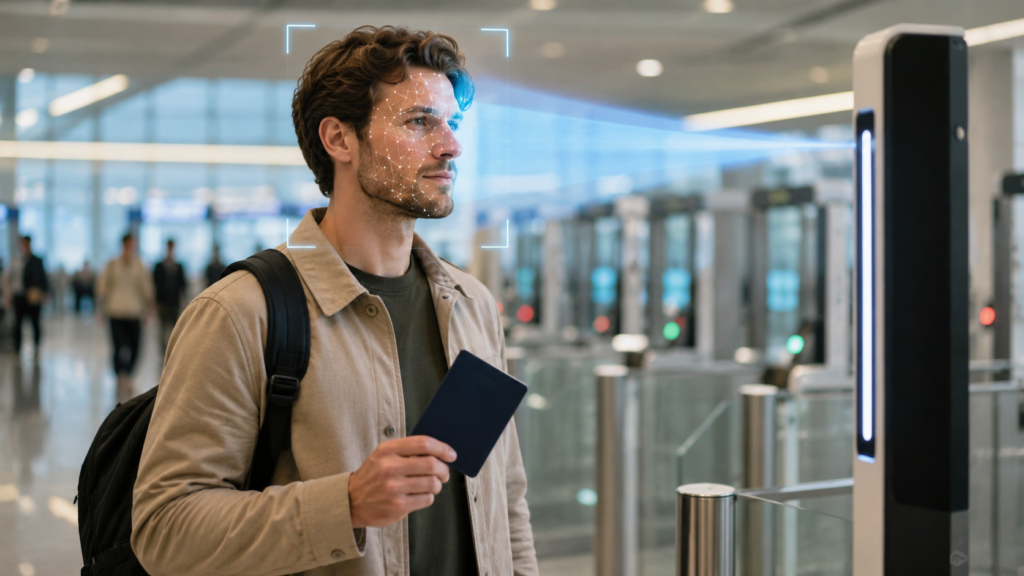
At an automated border gate, a camera photographs the traveller and compares that image with the one stored in the passport. When the match is strong enough and the other checks are completed, the traveller may be allowed to continue.
This is different from trying to identify an unknown person within a large database. The system already has a reference identity and is checking whether the person presenting the document appears to be the same individual.
Some borders rely heavily on automated checks, while others use border officers or a combination of both. In every case, the passport photo remains an important reference point.
Why the Rules Are So Strict
Passport authorities commonly require applicants to:
- Look directly at the camera
- Keep both eyes visible
- Maintain a neutral expression
- Avoid shadows across the face
- Keep hair away from key facial features
- Use a plain background
- Position the head correctly
- Submit a clear and recent image
These rules are intended to create consistency.
A tilted head, strong smile, uneven lighting, or partially covered face can change how facial features appear. A person may still be recognizable to the human eye, but the image can become less reliable for automated comparison.
The goal is not to produce a flattering portrait. It is to create an accurate identity image that can remain useful throughout the life of the passport.
The Original Photo Matters for Years
A passport photograph may be used long after the application has been approved.
The document can remain valid for several years, during which the image may be checked repeatedly by border officials and automated systems. A low-quality original can therefore cause more than an initial application problem.
Blur, poor lighting, awkward cropping, or an uneven background may make the image less useful as a long-term reference.
People naturally change over time. Hairstyles, facial hair, weight, and age can all affect appearance. Biometric systems are designed to handle some variation, but they still benefit from a clear and accurate starting image.
What an Electronic Passport Stores
An electronic passport contains a contactless chip embedded in the document.
The chip usually stores information from the machine-readable section of the passport, along with a digital version of the holder’s facial image. Security measures allow authorities to check whether the information is authentic and has been altered.
The chip is not designed to track the traveller’s movements. Its purpose is to help compatible systems read and verify the passport during an inspection.
Electronic passports are usually marked with a small chip symbol on the cover.
Why Filters Can Create Problems
Modern phones often apply automatic enhancements such as skin smoothing, eye brightening, facial reshaping, sharpening, or background blur.
These features may improve casual photographs, but passport photos are supposed to represent the applicant accurately.
Even subtle edits can change the appearance of facial features and make the image less dependable for identity checks.
Basic formatting is different from cosmetic alteration. Cropping the image, correcting its orientation, or preparing an acceptable background may be necessary. Changing the shape or appearance of the face is not.
The final photograph should show how the person naturally looks.
A Good Phone Does Not Guarantee a Good Photo
Most smartphones can capture high-quality images, but the device alone does not make a photograph suitable for a passport.
Problems can still arise when:
- The phone is held too close
- A wide-angle lens distorts the face
- Lighting creates heavy shadows
- The camera is positioned above or below eye level
- The person is not facing forward
- Portrait mode blurs parts of the hair
- Beauty settings alter facial features
- The background is cluttered or uneven
A simple setup often works best. Natural light, a direct pose, an eye-level camera, and a little distance between the subject and the phone can produce a clearer result than advanced camera effects.
How Online Passport Photo Tools Help
Passport, visa, residence permit, and identity card requirements can vary by country and document type.
An image that works for one application may not meet the crop, background, file size, or positioning rules of another.
Services such as PassportPhoto.online help simplify the formatting process. Users select the relevant country and document, upload a photograph, and receive an image prepared for the chosen format.
This can reduce the need to calculate measurements or crop the image manually.
However, online tools still depend on the quality of the original photograph. A blurry, heavily edited, or poorly lit image may not provide a suitable result. Final acceptance also remains with the authority processing the application.
Human Review Still Matters
Biometric travel is not completely automated.
When an electronic gate cannot confirm a match, the traveller may be directed to a border officer. Application photographs that fail an initial check may also require manual review.
Changes in appearance, lighting conditions, document damage, and image quality can all affect automated results.
A clear passport photo supports both parts of the process. It gives technology a stronger reference and makes visual inspection easier for officials.
Why the Photo Still Matters
As travel becomes more digital, the passport photo may appear to be just another file stored in a system.
In reality, it connects the traveller to the printed document and the information stored electronically. It may be viewed by officials, stored on a passport chip, and compared with a live image at an automated checkpoint.
A passport photo is therefore more than a picture used to complete an application form. It is a long-term identity reference.
That is why getting the image right from the beginning still matters.