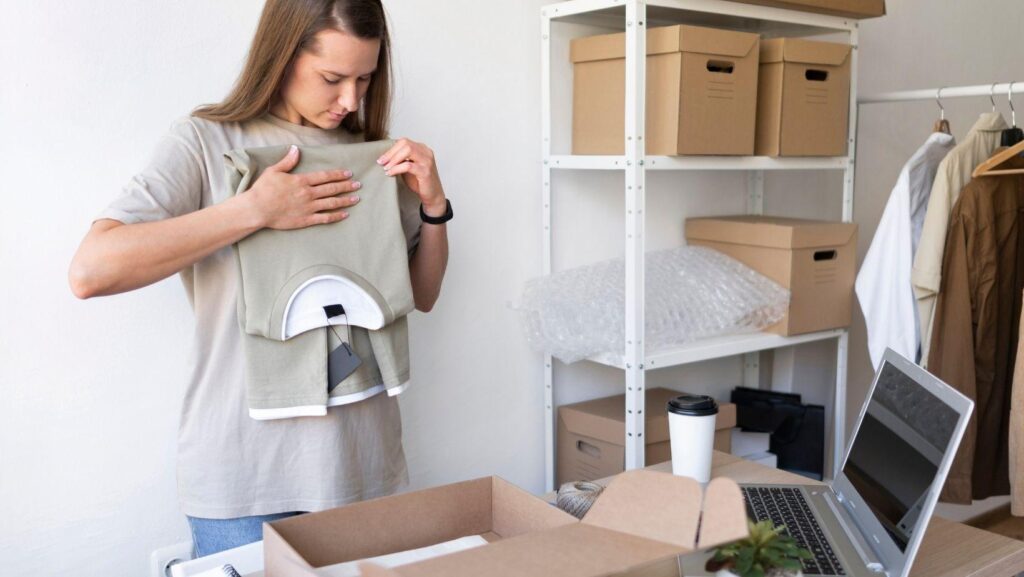
Clothing may seem easy to send because most pieces are flexible and relatively light. However, pressure, friction, and unsuitable folding can leave fabrics stretched, creased, or marked. For a wardrobe parcel, international shipping works best when garments are grouped by material before they are placed in the box. This method helps preserve their shape and simplifies the description of the contents.
Reducing Volume Without Damaging Fabrics
Saving space requires several methods for different materials. Clothing should be compressed only when its structure and finish can tolerate pressure.
Cotton T-shirts, leggings, and simple sportswear can be rolled because they usually recover quickly after unpacking. Woven shirts and formal trousers are better folded along their seams, with tissue paper placed across areas that crease easily.
Knitwear needs a flatter position. Heavy sweaters may stretch inside a narrow bundle, so arrange them in short layers and keep shoes or belts away from the top.
Vacuum bags suit durable clothing without padding, glued decoration, or coated surfaces. Down jackets, wool garments, and embroidered pieces need enough air to preserve insulation, texture, and decorative details.
Clean and dry footwear before placing it inside the parcel. Fill each shoe with plain paper, then put the pair in a separate fabric bag to prevent dark leather, soles, or buckles from marking nearby apparel.
Removing duplicates also reduces volume without affecting the value of the wardrobe. Keep complete outfits, seasonal layers, and versatile clothing rather than several pieces intended for the same purpose. Once every material has been prepared correctly, the next task is to create an accurate inventory.
How to List Personal Belongings for Customs?
Broad descriptions such as “used clothes” do not explain what the parcel actually contains. Before sealing the box, record each category with enough detail to identify the material, quantity, and condition:
- cotton shirts — state the number of pieces and indicate whether the clothing is new or previously worn;
- wool sweaters — identify the main fiber and record the quantity;
- leather shoes — describe the footwear and specify how many pairs are enclosed;
- synthetic jackets — note the principal material and whether the outerwear contains padding;
- fabric accessories — list scarves, textile belts, hats, or reusable bags as separate categories.
These entries allow the declaration to reflect the actual wardrobe rather than one undefined group. They also make it easier to assign realistic values to clothing with different materials and conditions.
Use the same wording in the inventory and customs form. For example, an item described as “leather shoes” in one document should not appear as “fashion accessories” elsewhere.
Accurate descriptions establish a reliable paper trail, but digital records make it easier to keep every detail consistent.
How Do Digital Tools Help Prevent Mistakes?
Begin with a saved online draft instead of confirming the order immediately. Enter the recipient’s address, clothing categories, packed weight, and outer dimensions, then review the information after the box has been sealed.
Photographs taken during preparation can support the written inventory. Store them with the receipt and customs documents so the contents can be checked later without relying on memory.
An online account keeps order details, tracking updates, and records in one place. This is particularly helpful when several clothing parcels are intended for different recipients or dispatched on separate dates.
Before completing the order, compare the label with the information entered online. Make sure every declared category is inside the box and that no last-minute garment has been added without appearing in the inventory.
Proper folding and precise records protect clothing at different stages of overseas delivery. Customers can use Meest-America to create the order online, check the estimated cost, choose a convenient drop-off point, and follow the parcel while it is in transit. When the physical contents match the digital documentation, the entire process becomes easier to control.