Ten years ago “chatbot” meant a stiff little box on a website. Now people are having late-night talks, role-play scenes, and even “relationships” with AI companions that remember details, send voice notes, and feel weirdly human. In 2025, virtual companions are a whole ecosystem: some are soft and supportive, some are flirty, some are openly 18+.
Let’s walk through five popular types of AI companions, how to use them, what’s actually innovative about them now, and where an 18+ ai chatbot like the one at Joi.com fits into the picture.
How AI companions got this good (short version)
- Old days: simple scripts and FAQ bots. No memory, no personality, just canned replies.
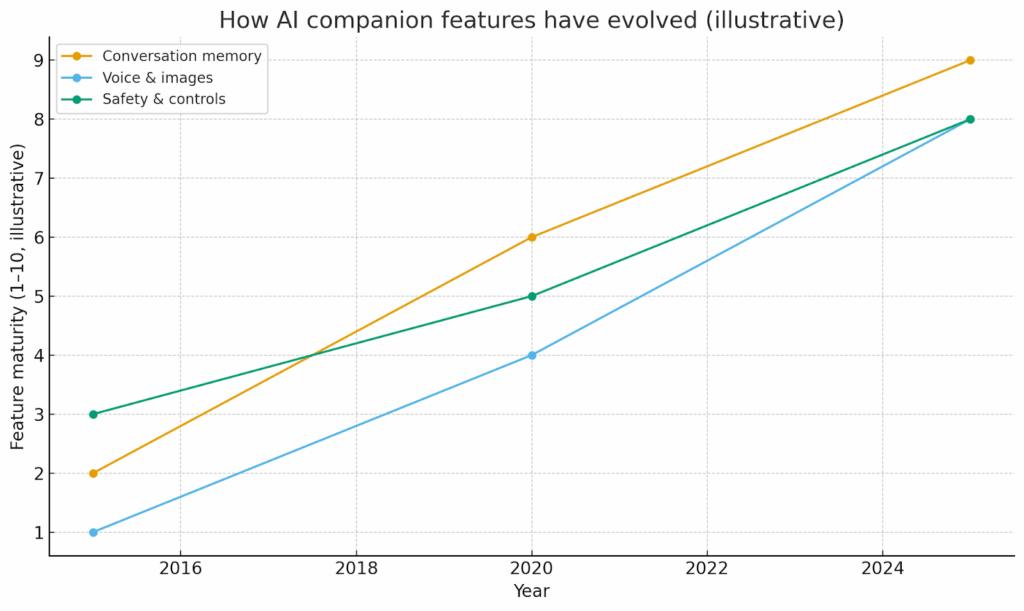
- Around 2020: big language models arrive. Suddenly the bot can chat naturally, follow a topic, and role-play a bit.
- 2023–2025: things level up fast — long-term memory, custom characters, images, voice, and stricter rules around safety, especially for teens. Platforms like Character.AI and others now even ban under-18s from full companion access after serious mental-health concerns and lawsuits.
Now you can pick an AI that acts like a friend, therapist-adjacent listener, anime boyfriend, or explicit 18+ partner, depending on the app.
5 AI virtual companions and how they feel to use
1. Replika – the “classic” emotional companion
Replika has been around long enough to feel like the elder statesman of AI friends. It focuses on conversation, journaling, and emotional support rather than NSFW content (that part was removed and hasn’t come back).
How you use it
- Install the mobile app, create your avatar, pick a personality style.
- Chat daily, do little “activities” and quizzes, and let it learn your habits.
- It’s especially tuned for people who want a supportive listener instead of a spicy role-play partner.
What it feels like: like texting a patient, slightly idealized friend who never runs out of questions about your day.
2. Character.AI – a whole multiverse of personas
Character.AI lets you talk to thousands of user-made personas: fictional characters, celebrities, original OCs, and “boyfriend/girlfriend” types. It’s more about creativity and fandom than mental-health support.
Recently, they’ve drawn headlines for banning minors from full access to companions after serious concerns about teen over-attachment and mental health.
How you use it
- Go to the site or app, pick a character or build your own.
- Start chatting and steer the scenario: romance, lore-talk, casual banter, whatever.
- Great if you like role-play or want to talk to “versions” of fictional people.
What it feels like: being in a massive RP server where everyone else is an AI.
3. Nomi.ai – long-term memory and emotional intelligence
Nomi is designed to feel like a small group of close AI friends (“Nomis”) rather than a giant public character library. Its big selling point is persistent memory and emotional nuance.
How you use it
- Set up one or several Nomis with different personalities.
- Talk about your life, vent, brainstorm; it leans into empathy and continuity.
- It remembers older conversations and builds on them, so it feels like an ongoing relationship.
What it feels like: a small private cast of characters who actually remember what you told them three weeks ago.
4. Anima (myanima) – romantic and flirty companion
Anima positions itself very clearly as a romantic / dating-style bot: AI girlfriend or boyfriend, with guided onboarding, leveling systems, and lots of role-play.
How you use it
- Create your companion (appearance + traits).
- Choose the kind of relationship vibe: cute, dominant, shy, etc.
- Chat, go through “scenes,” send gifts, and unlock more interaction as you level up.
What it feels like: part dating sim, part chat, leaning toward romance and mild spice rather than heavy NSFW.
5. Joi AI and its 18+ AI chatbot
Joi AI is very upfront: it’s an adult-oriented, sex-positive AI companion platform built for immersive, often NSFW chats and role-play. Reviews describe it as uncensored for adult conversations and fantasies, as long as everything stays legal and within its policies.
How you use it
- Confirm you’re 18+, then choose or tweak the character.
- Decide the tone: romantic, explicit, soft, dominant, experimental.
- Role-play scenes, talk about your day, or just use it as a private sandbox for exploring desires and communication style.
What it feels like: texting a very responsive, never-judgmental partner who’s clearly there for adult chat, not small talk about spreadsheets.
Quick comparison: pros and cons
| AI companion | Best for | Main pros | Main cons / things to watch |
| Replika | Emotional support, self-reflection | Long history, mental-wellness vibe, lots of non-sexual features | NSFW removed; can feel a bit “app-like” and gamified |
| Character.AI | Creative RP, fandom, many personas | Huge character library, fun for role-play and experiments | Safety changes (no minors, stricter rules); quality varies a lot by character |
| Nomi.ai | Long-term, emotionally aware chats | Strong memory, designed for deeper relationships | Smaller ecosystem; more about feelings than fantasy |
| Anima (myanima) | Romantic / flirty AI partner | Clear “AI girlfriend/boyfriend” focus, leveling and gifts, good for dating-sim fans | Can nudge you toward spending; romance can feel scripted at times |
| Joi (18+ AI chatbot) | Adult role-play and NSFW chat | Built for 18+ fantasies, deep character customization, sex-positive positioning | Easy to overuse; very tempting as a substitute for real intimacy; absolutely adults-only |
What’s actually new in AI companions now
If you zoom out, a few big innovations stand out:
- Serious memory
Apps like Nomi and newer platforms brag about remembering your favorite music, your ex’s name, or that rough week you had in July — and bringing it up later in a natural way. - Multimodal companions
It’s not just text anymore. Many companions send images, use voice, or appear as animated avatars. Some NSFW-focused tools allow custom visual content built around your prompts. - Safety and age gates
After a wave of concern about teens bonding too deeply with bots, you now see bans on under-18s, time limits, and legal proposals targeting “AI companions” specifically — not just generic chatbots. - Niche specialization
Instead of one generic “AI friend,” you now have grief companions, language-learning buddies, queer-specific friends, kink-aware partners, and more. Articles listing “best AI companions” in 2025 read like menus of lifestyles and fantasies.