
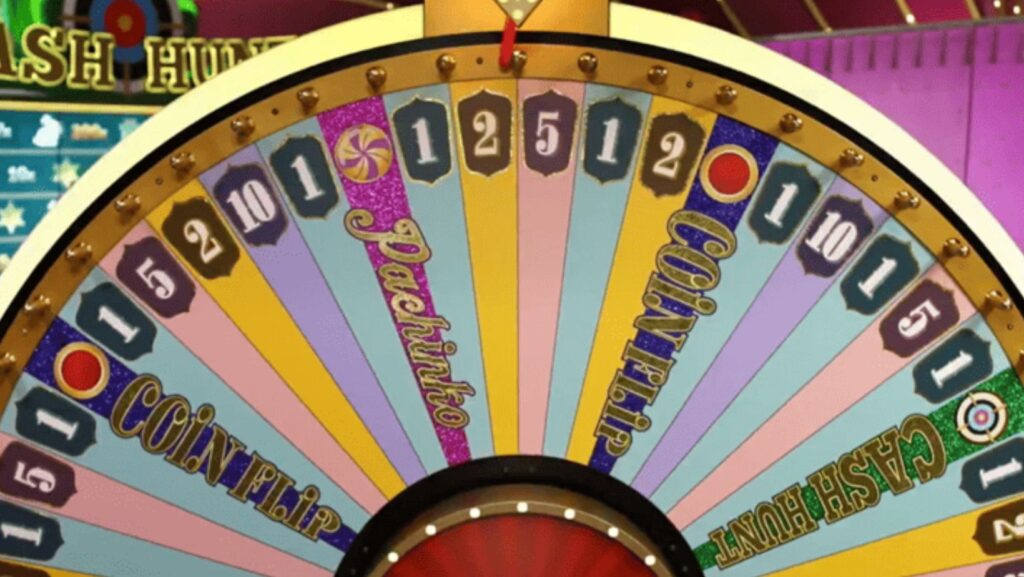
Wheel games attract players with their visual clarity and simple rules. Everything seems straightforward: the wheel spins, a segment lands, and the outcome is clear. This surface-level simplicity is exactly what leads to most mistakes. Decisions are made quickly in these formats, and the visual dynamics increase engagement, causing players to overestimate their understanding of what is actually happening.
The main issue lies not in the mechanics of wheel games themselves, but in how players interpret the process. They attempt to find logic where probability is at work, relying on feelings instead of analysis. To avoid this, more attention is being paid to understanding game structure and common behavioral mistakes. Analytical materials and recommendations collected on specialized resources such as https://crazytime.com/ help players view wheel games as systems with clear parameters rather than as a sequence of “lucky” or “unlucky” moments.
Recognizing typical mistakes is the first step toward calmer and more controlled play. When players understand why they make certain decisions, the influence of random impulses is significantly reduced.
Expecting Patterns Where None Exist
One of the most common mistakes in wheel games is looking for patterns in random outcomes. After several identical or, on the contrary, rare results, players often feel that “something is bound to happen.” This feeling may seem logical, but it has no connection to actual probability.
Players frequently fall into this expectation trap because:
- previous results are treated as factors influencing the next spin;
- rare outcomes are seen as “overdue” after a long absence;
- streaks are interpreted as signals rather than statistical coincidence.
Each spin in a wheel game is independent of the previous one. The wheel does not “remember” which segments appeared before. When players base their decisions on expectations of compensation or streak continuation, they effectively abandon rational thinking. This leads to inflated risk and unjustified bets made in the hope of “catching the moment.”
Mixing Emotions with Decisions
Wheel games strongly influence emotions. Visual effects, anticipation of the outcome, and the sense of being close to a win intensify involvement. In such conditions, emotions easily enter the decision-making process and replace analysis.
This most often shows up in the following ways:
- after a loss, players try to recover immediately;
- after a win, they feel compelled to increase bets without objective reasons;
- decisions are made faster than usual, without considering consequences.
Emotion-driven decisions are dangerous because they are almost always short-term. Players react not to the structure of the game, but to their internal state. As a result, the logic of the previous strategy is lost and actions become chaotic. Consciously separating emotions from decisions is a key skill that helps maintain control and prevents the game from turning into a chain of impulsive moves.
Focusing on Results Instead of the Process
Another common mistake is evaluating decisions solely based on the outcome of a single spin. A win is perceived as proof that the decision was correct, while a loss is treated as an error. This approach distorts understanding of the game and makes it difficult to assess one’s strategy objectively.
In reality, the result of a single spin says very little about the quality of the decision. It may simply be the outcome of randomness rather than logic. When players fixate on results, they stop analyzing the process itself: why the bet was placed, under what conditions, and with what level of risk.
Focusing on the process allows players to:
- evaluate decisions based on how well they align with the chosen strategy;
- avoid changing approach after every individual result;
- maintain consistency over the long run.
When attention shifts from outcomes to decision logic, the game becomes more predictable in terms of the player’s own behavior. This reduces sharp strategy changes and helps avoid chains of mistakes.
Lack of Bankroll Management and Risk Control
Even with an understanding of mechanics and awareness of emotional reactions, many players make a basic mistake: they fail to set clear risk limits. The absence of bankroll management makes any strategy vulnerable, especially in dynamic wheel games.
The main issues here include:
- bet sizes increasing during a session without predefined limits;
- acceptable risk levels are being revised under emotional pressure;
- losing track of how much of the bankroll is actually at stake.
Without clear boundaries, every decision becomes potentially dangerous. Risk management does not guarantee a win, but it limits the scale of mistakes. When players define limits in advance and stick to them regardless of how the game unfolds, wheel games stop being an uncontrolled process.
A wheel game becomes manageable not when players try to guess the next outcome, but when they control their own decisions. This is what separates random play from a considered approach, even in formats where the result always remains probabilistic.
In wheel games, players lose not because of the mechanics, but because of repeated thinking errors. Expecting patterns, emotional decision-making, focusing on isolated results, and lacking risk control gradually undermine even the most confident approach. Understanding these mistakes and working through them allows players to stay calmer and act more deliberately.