
If the answer can wait until tomorrow morning, you should not be paying today’s rates for it. DeepSeek Models are billed at a published discount during a fixed overnight window — 00:30 to 08:30 Beijing time — and moving deferrable work into that window is an operations change, not an architecture change: same endpoints, same payloads, same client code, with a queue and a scheduler in front of it. This article covers what the window actually discounts, which jobs fit inside it, and how to do the shift without touching your application logic. Because a discount everyone shares is a rate-limit problem as much as a pricing problem, it also pays to put a router such as OrcaRouter between your workers and the API to absorb the 429s and keep the queue draining.
Batch work is the quiet line item that grows until somebody finally audits it. Backfills, embedding refreshes, nightly evals, classification of everything your product has ever stored — none of it is latency-sensitive, all of it is billed by the token, and most teams run it during business hours out of pure habit. DeepSeek’s off-peak terms turn that habit into an avoidable cost. The discount is not a promo code or a negotiated enterprise rate; it is printed on the public pricing page, it recurs every single night, and it is deep enough that scheduling usually beats optimization — running more tokens at a discount is cheaper than engineering fewer tokens at full price.
What exactly does the off-peak window discount?
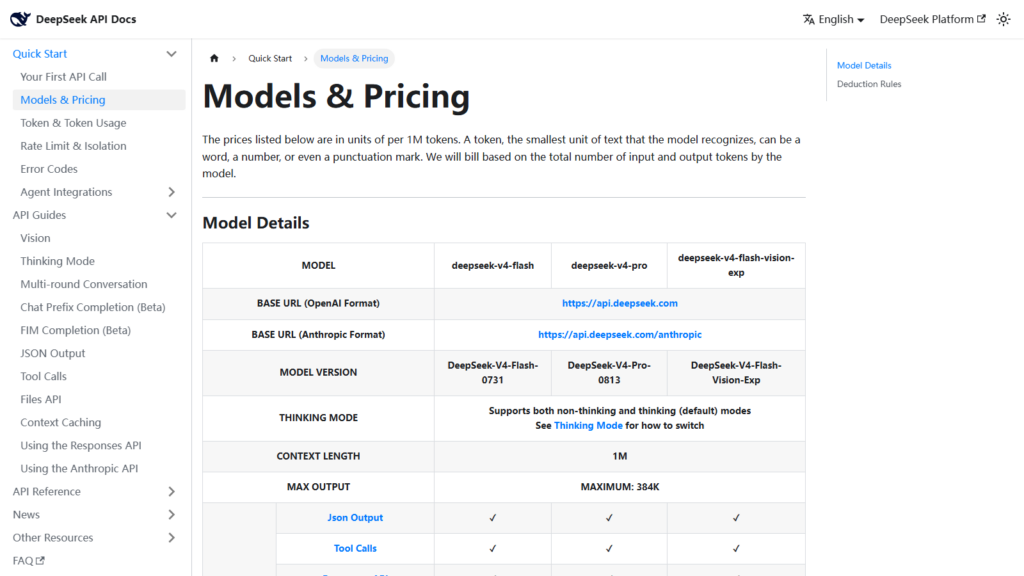
DeepSeek publishes an off-peak discount on its standard API pricing: between 00:30 and 08:30 Beijing time (GMT+8) — which is 16:30 to 00:30 UTC — input tokens are billed at half the standard rate and output tokens at a quarter of it. That is an eight-hour runway, every night, on the same models your code already calls. Nothing is opt in, there is no separate endpoint, and there is no flag to set: the discount is a property of when the request is processed.
Two asymmetries in those terms are worth internalizing. First, the output discount is deeper than the input discount, so jobs that generate long responses — summaries, drafted documents, reasoning traces — save more per request than jobs that mostly read context and answer in a line. Second, the window is anchored to Beijing time, which has no daylight saving, so the UTC equivalent (16:30–00:30) is stable year-round. Compute it once, in UTC, and never think about it again.
Terms like these do change, so treat the pricing page as the source of truth rather than this article.
Which jobs actually fit inside eight hours?
The test is one question: would anyone genuinely notice if the answer arrived at 09:00 Beijing time instead of right now? If not, the job is a candidate. In practice that covers most of what teams run at scale: backfills over accumulated documents, chats, or tickets; regenerating embeddings when a model or chunking strategy changes; nightly eval suites and regression prompts; scheduled reports and digests; dataset labeling, deduplication, and log summarization.
What does not fit is anything with a human waiting on the other end. User-facing features, agent loops that pause for input, anything carrying an SLA — those stay at full price, and the deferral layer you build should leave them completely alone.
Eight hours sounds generous, but it is not infinite. Your throughput inside the window is bounded by rate limits, not by the clock, so before you promise a stakeholder that a two-million-document backfill will be done “tonight”, measure how many requests per hour your concurrency level actually sustains and do the arithmetic. The window is a discount, not an extra-large quota.
How do you shift jobs into the window without rewriting the app?
Keep every call site in your application exactly as it is. The window is a billing property of when a request lands, not a different API, so the rewrite you are tempted to make does not need to exist. What you add instead is a thin deferral layer with three parts:
• A queue with a deferrable flag. Jobs that pass the “would anyone notice tomorrow?” test get marked and held; everything else flows straight through at whatever time it arrives.
• A scheduler that opens the gate at 16:30 UTC and closes it shortly before 00:30 UTC, leaving a safety margin so no job straddles the boundary into full-price territory.
• Workers that call the same endpoint with the same payloads your application already uses. From the API’s point of view, nothing about the request has changed — only the hour on the clock.
Teams implement this at three levels of maturity. The simplest is a cron job at 16:30 UTC that drains a queue until it is empty or the margin hits. The middle version adds a deadline field: a job waits for the next window if that window opens before its deadline, and runs immediately at full price if it does not — which turns “cheap or on time” into an explicit per-job decision instead of an outage. The most mature version runs work immediately but treats the window as a retry budget: if a deferrable job hits rate limiting outside the window, it backs off until 16:30 UTC instead of hammering away at full price.
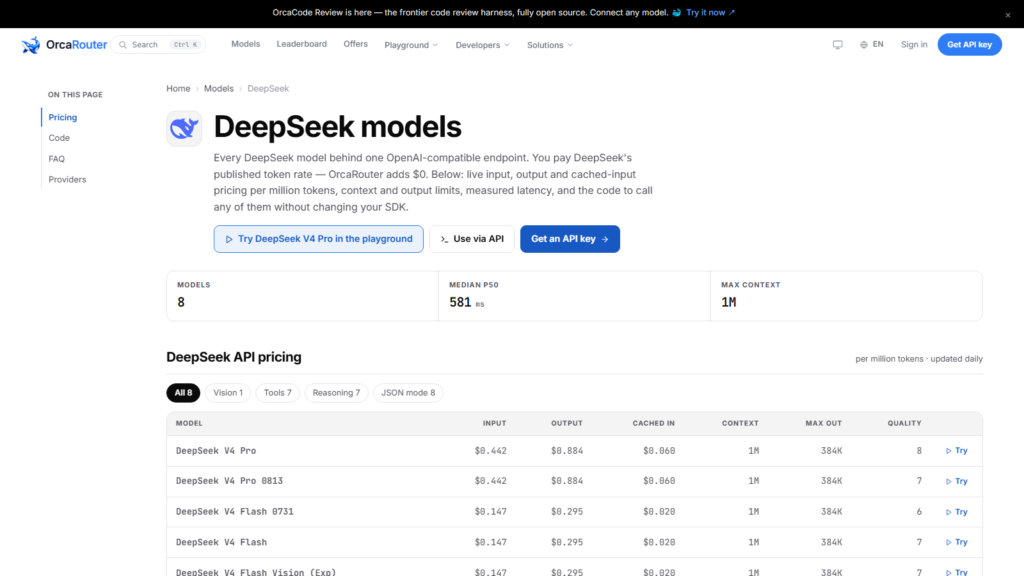
Two operational details separate the teams who actually capture the saving from the teams who merely schedule around it. Log token counts and effective per-request price, so you can verify on real data that the discount applied — a timezone bug in your scheduler will otherwise silently bill you full price for “discounted” work. And if you route through a router such as OrcaRouter, the backoff handling and per-job spend logging come in one place rather than being rebuilt per service.
What breaks when everyone piles into the same cheap hours?
Rate limits, not the clock, are the real ceiling. A discount window this deep is popular by definition, and the capacity inside it is shared, which means a queue that fires all at once at 00:30:00 Beijing time spends the night negotiating with 429 responses. Stagger job release across the whole window, cap worker concurrency, and treat exponential backoff as part of the design rather than an error path. A queue that drains steadily from 16:30 to 00:15 UTC beats a queue that sprints and stalls.
Watch the edges. Billing follows when tokens are actually processed, so a job that starts at 08:20 Beijing time can run past 08:30 and pay full price for its tail. Keep your last scheduled start well inside the window.
Expect latency variance, too. Overnight capacity is cheaper for a reason, and response times inside the window can be slower and less predictable than at midday. For batch work this is irrelevant; for anything user-facing it is disqualifying — one more reason the deferrable flag has to be honest.
Finally, the failure that costs the most is the quietest: a scheduler configured in the server’s local time instead of UTC will run your jobs eight hours off, every night, and your invoice will look exactly as it would have if you had never heard of the window. Verify the discount on the invoice, not in the plan.
The takeaway
If you hold token work that can wait until morning, moving it into DeepSeek’s off-peak window is the cheapest capacity decision you will make this quarter: same models, same code, a published discount that recurs every night without negotiation. The full cost of capturing it is a queue, a scheduler, and the discipline to do your timezone math in UTC and check real invoices afterward. Pick one backfill job, point it at tonight’s window, and let one night’s spend make the argument for the rest.
Sourcing note: The off-peak window (00:30–08:30 Beijing time, equivalent to 16:30–00:30 UTC) and the associated discounts (50% off input tokens, 75% off output tokens) are taken from DeepSeek’s published API pricing documentation and were checked on 2026-09-07. Both the window and the discounts can change; confirm against the live pricing page before scheduling production work around them.