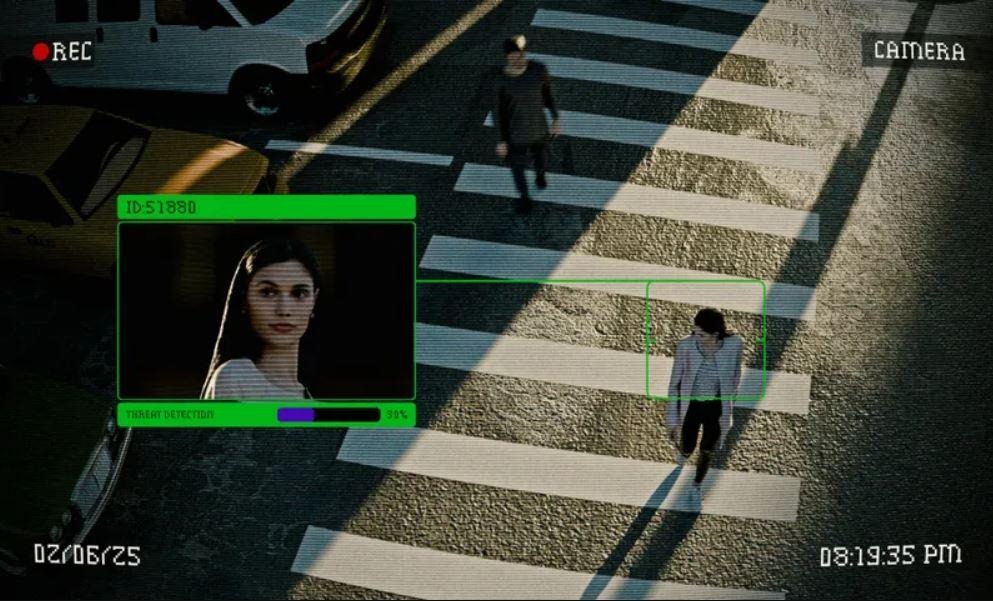
Freedom of Information Act (FOIA) requests increasingly involve video: police bodycam footage, dashcam recordings, facility security cameras, and public transportation systems. While transparency laws promote public access, they do not eliminate privacy obligations. In fact, video disclosures create a recurring operational dilemma: how to release responsive footage without exposing bystanders, minors, vehicle owners, or sensitive contextual details.
For public agencies, municipalities, transit operators, and even government contractors, the key challenge is not whether to disclose – but how to disclose responsibly. That means narrowing scope, redacting identifiable individuals, and ensuring that what is released cannot reasonably re-identify uninvolved parties.
FOIA Disclosure Does Not Mean Unfiltered Disclosure
FOIA promotes access to public records, but it also includes exemptions that protect personal privacy, law enforcement interests, and other sensitive categories of information. Courts and agencies routinely balance transparency against the risk of unwarranted invasion of personal privacy.
In video records, that balance often turns on identifiable features such as:
- Faces of bystanders and minors
- Vehicle license plates
- Name badges or ID cards
- Documents visible in-frame
- Computer screens or mobile devices
Even when an incident itself is disclosable, the identities of uninvolved individuals typically are not. This is where structured video redaction becomes essential.
Why Faces and License Plates Are the First Redaction Layer
In most FOIA video scenarios, the most direct identifiers are faces and license plates. A bystander standing behind an arrest scene, a pedestrian crossing in the background, or a parked vehicle near an incident can all become identifiable once footage is released publicly.
In U.S. litigation and public records practice, agencies frequently redact third-party faces to prevent unnecessary exposure. License plates, while not always treated uniformly across jurisdictions, are often blurred as a risk-reduction measure – especially when public distribution is broad and uncontrolled.
Unlike internal evidence review, FOIA releases are effectively global publications. Once posted online, footage can be copied, enhanced, analyzed frame-by-frame, and redistributed. That amplifies the risk of re-identification far beyond the original context.
Common Operational Risks in FOIA Video Releases
Agencies responding to FOIA requests face recurring technical and workflow risks:
- Releasing full-length footage when only a short segment is responsive
- Blurring the primary subject but missing background faces
- Failing to redact readable plates in parking areas
- Overlooking reflections in mirrors or windows
- Inconsistent masking across long recordings
In high-profile cases, even a single unblurred frame can circulate widely on social media. From a risk management perspective, redaction must be stable, consistent, and irreversible in practical terms.
A Practical FOIA Video Redaction Workflow
A defensible release process typically includes the following steps:
- Define the responsive scope. Identify the exact time window and camera angles that respond to the request. Avoid exporting entire archives.
- Apply automated face and plate blurring. This establishes a baseline layer of protection for direct identifiers.
- Manually review for secondary identifiers. Look for name badges, documents, screens, or contextual clues that could expose identity.
- Perform quality assurance. Check transitions, motion-heavy segments, and low-light scenes for missed frames.
- Export a redacted master. Retain an internal controlled copy and release only the redacted version.
This approach ensures both transparency and privacy protection, while maintaining auditability of the process.
On-Premise Processing for Public Agencies
Because FOIA-related footage often includes sensitive incidents – such as arrests, medical emergencies, or use-of-force events – many public agencies prefer to keep redaction workflows inside their own infrastructure. Local processing reduces unnecessary exposure of raw files, limits third-party data transfers, and helps maintain tighter control over evidentiary handling.
For agencies looking for video anonymization software, Gallio PRO provides a file-based, on-premise workflow for recorded video and still images. It automatically blurs faces and vehicle license plates, but it does not anonymize full body silhouettes and does not support real-time or live-stream anonymization. Its automatic detection is limited to faces and license plates, which makes the workflow easier to control in formal disclosure processes.
Other elements – including logos, tattoos, name badges, documents, or content visible on screens – are not detected automatically. These can be redacted manually in the built-in editor, which is particularly useful in FOIA responses where most frames can be processed automatically, while the remaining edge cases still require human review.
Gallio PRO also does not collect logs containing face or license plate detection data, and it does not store logs containing personal or sensitive information. For public agencies that need to balance transparency, auditability, and data minimization, that can simplify internal governance around disclosure workflows.
If your team is assessing software for public records releases, it is worth validating the workflow on representative bodycam, dashcam, or CCTV footage before adopting it at scale.
Long Recordings and Stability Across Frames
Bodycam and dashcam footage often runs continuously for extended periods. In these cases, stability of redaction across the entire timeline matters. Lighting changes, movement, and partial occlusions can cause temporary detection loss if not reviewed carefully.
Before release, agencies should review:
- The first and last seconds of each appearance of a face
- Moments of rapid camera movement
- Low-light scenes and flashing lights
- Reflections in vehicles or storefront glass
Consistency is critical. A redaction process that works 99% of the time still leaves exposure risk if the remaining 1% includes identifiable frames.
Balancing Transparency and Privacy
FOIA compliance is not simply about disclosure volume. It is about lawful disclosure. Courts recognize that agencies must avoid unnecessary invasions of privacy while fulfilling public records obligations. Structured redaction demonstrates that the agency has taken reasonable steps to protect third parties.
For municipalities and public institutions, this balance is not theoretical. It directly affects public trust, litigation exposure, and operational credibility.
Key Takeaways for FOIA Video Releases
- Narrow the scope before exporting footage.
- Blur faces and license plates as a baseline protection layer.
- Review manually for additional identifiers.
- Perform quality assurance across the full timeline.
- Maintain a controlled redacted master for consistent future use.
Public disclosure does not eliminate privacy risk – it amplifies it. A structured, repeatable redaction workflow helps agencies meet transparency goals without exposing uninvolved individuals.
FAQ – FOIA Video Redaction
Are agencies required to blur all faces in FOIA releases?
Not categorically, but agencies commonly redact bystander faces to prevent unwarranted invasion of personal privacy, particularly when individuals are not subjects of the incident.
Should license plates be blurred in publicly released footage?
While treatment can vary by context, many agencies blur plates as a risk-reduction measure, especially for broad public dissemination.
Is automated redaction sufficient?
Automation typically handles the majority of frames involving faces and plates. Manual review remains important for edge cases and secondary identifiers.
Does on-premise processing matter for FOIA workflows?
Yes. Many public agencies prefer local processing to maintain control over sensitive footage and reduce third-party exposure.
Can redacted footage still be considered a public record?
Yes. Redaction is a standard mechanism used to balance transparency with privacy protections under FOIA exemptions.
References
5 U.S.C. § 552 – Freedom of Information Act
U.S. Department of Justice, Office of Information Policy – FOIA Guide
Federal Rule of Civil Procedure 26 – Proportionality and Protective Orders