Expecting change in the regulatory sphere of online gambling has become inevitable. It is not a veteran of the entertainment world, and even this industry has been subject to shifting priorities and new concerns.
Sports betting is one of the two major arms of digital gambling, together with casino games. Each attracts a dedicated following, and cross-selling has become a priority for many gambling brands. That’s yet another point of contention for regulators, as proven by recent UKGC measures against cross-product incentives.
This industry thrives on competing to provide the best odds, the most complete platform, and enhancing the user experience with insights. On a macro level, taxation and overall access are the responsibility and jurisdiction of regulating authorities, which impact everyone.
This is the angle that we’ll adopt in this article. We will discuss the changes in the sports betting industry that we know of and have observed in the early part of 2026. Some are more speculative, while others are factual.
We strongly believe that it’s an important exercise for anyone involved. It matters if you’re just looking for wagering value, finding betting tips today, or are just studying the market. May the insights of this article clarify where this industry is heading!
Sports Betting Was Steadily Rising, But Prediction Markets Are Coming Fast
The rise of sports betting is a regional story in which the actors are influencing themselves. They also navigate major regulatory decision-making, especially now that we are in the age of digital gambling.
We’ve come very far from the point of bets made at the racetrack, of underground bookies (which still exist, just very differently), major illegal rings, and on-site wagering at a casino or agency.
All of the above still exist, but they have been significantly shrinking because of online gambling. This pie has various slices: the regulated betting market, the illicit market, and, nowadays, the gray area of prediction markets.
The starting point has been a steadfast presence of regulations. The Gambling Act of 2005 opened things up in the UK, while the Supreme Court ruling in Murphy v NCAA did the same in the USA. These two majorly important spaces have moved quite a while ago toward regulatory clarity and openness to legal gaming solutions.
Part of it was to open up new taxation revenue, but also to gain a hold on an industry that was clearly booming behind the scenes. This regulatory clarity has been a great opportunity for a controlled and much safer market. One that did its due diligence regarding responsible gambling.
Naturally, the model has not been perfect by any means, but it has not been ruinous. Clearly, it has been a much better alternative than letting the illicit space flourish. Internet access made it almost impossible not to have a direct pipeline toward illegal betting, making total prohibitions almost impossible.
Prediction markets are the newest entry into this list because, as we’ve said, they sit in a limbo that has recently started to clarify. Namely, it has been showing its true colors, but it has also come under regulatory scrutiny in its primary market: the USA.
Will Prediction Market Regulations Impact The Overall Gambling Field?
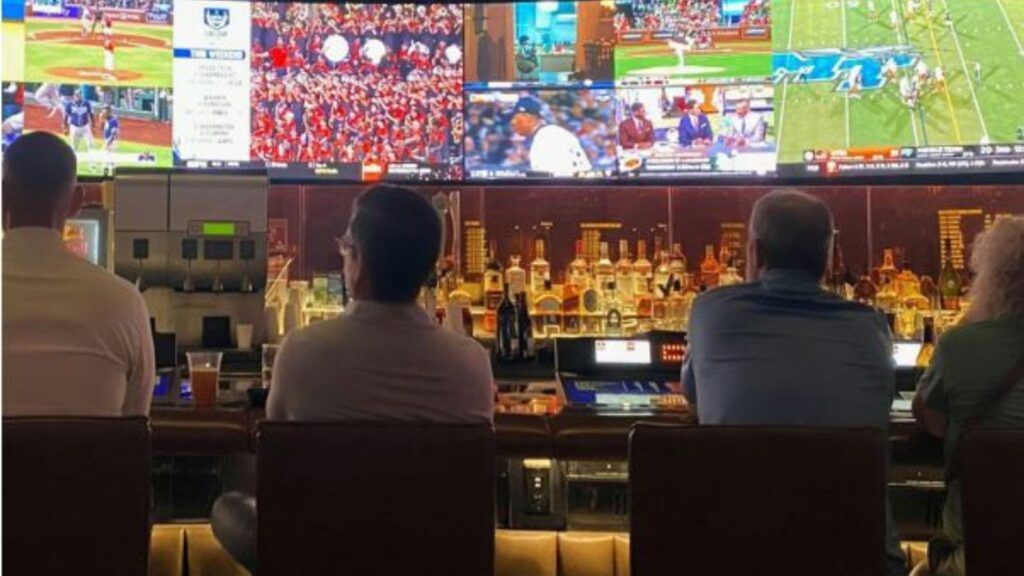
News around the time of Super Bowl LX broke that the online betting company’s stock had taken a major dive. The reason? People had an immense flow of gambled money within prediction markets.
Namely, Polymarket and Kalshi, a new duopoly in the guise of DraftKings and FanDuel, which is painfully ironic. Two major platforms are competing to dethrone another duopoly.
At face value, it’s very easy to see how the online betting world is under the direct effect of a perceived prediction market bubble. They are a wildly different model that is taking away clientele and operating under CFTC regulations, not outright gambling authorities.
Beyond business implications, we see a battle over perception. You have the betting companies, which are positioning themselves as those that do things ‘the right way.’ On the other hand, you have these prediction platforms, which are the new alpha disruptors in the gambling world, but are situating themselves as trading-style operators.
In the USA, lobbying is the norm, and it remains up in the air to see how administrations and legislators perceive the overall situation. At the state level, Massachusetts has already taken strong legal actions against Kalshi, while Polymarket has been in the crosshairs of Nevada, especially given the state’s symbiotic relationship with the gambling industry.
Depending on how the regulatory arc advances for prediction markets, which are currently legal at the federal level, betting legislation may change, or simply do its best to influence the laws affecting competition. Co-existence appears less and less feasible.
Noteworthy Changes In Sports Betting Regulations

It’s difficult to assess changes on a global level, which is why we’ll focus on some jurisdictions that have had major changes. Moreover, we’ll talk about markets where gambling represents a new or highly lucrative financial sector.
Sports betting tends to be slotted in with the overall online gaming industry, which is why it’s part of the discussion. Not all these movements are about sports wagering specifically, but they affect it nevertheless:
● In the USA, an interesting development regarding gambling has come as a result of the One Big Beautiful Bill Act, the signature piece of legislation of the 2nd Trump administration.
The principle is simple: an American gambler can deduct from their winning the equivalent of 90% of their losses in that particular year. If you win $10,000 over a year, but have lost the same amount, you’d be able to pay 10% of your losses during that tax year.
You might’ve broken even in terms of wins and losses, but your taxes require you to fork up duties based on what you lost. Naturally, reactions have not been pretty, and this measure came into effect once January 2026 rolled around.
● In South America, we are seeing interesting developments regarding taxation as well. Chile, a country that has been entering the field of regulated online gambling, has settled on its tax methodology, imposing a standard 19% VAT, which brings the total levy to a total of 28%.
The country has allowed the betting market to gain legitimacy in its jurisdiction, but at a settled cost that will certainly feel quite high.
● In Europe, we’re slowly seeing the dissolution of the state-mandated monopoly, allowing the market to free up, but under the conditions of very high standards. Finland and Austria are the ones that are the most apparent, with the Nordic country doings its best to curb overbearing incenvitization.
Conclusion: Is The Specter Of Problem Gambling Going To Bring Any Changes?
A recent article from the Harvard Gazette came with very fascinating figures regarding the correlation between the rise of legal sports betting and growing patents affected by gambling addiction.
It also uses public sentiment considerations from the Pew Research Center, showcasing an increased wariness of the American public regarding the negative societal impact of legalized and mass-avaialble gambling.
This point goes to the idea that issues regarding betting are starting to creep into public consciousness.
We are mentioning this because mounting problem gambling concerns may be a precursor to changes in regulations. Tightening access and better relief solutions are just some of the most apparent measures. If you’re a betting person, please gamble responsibly!