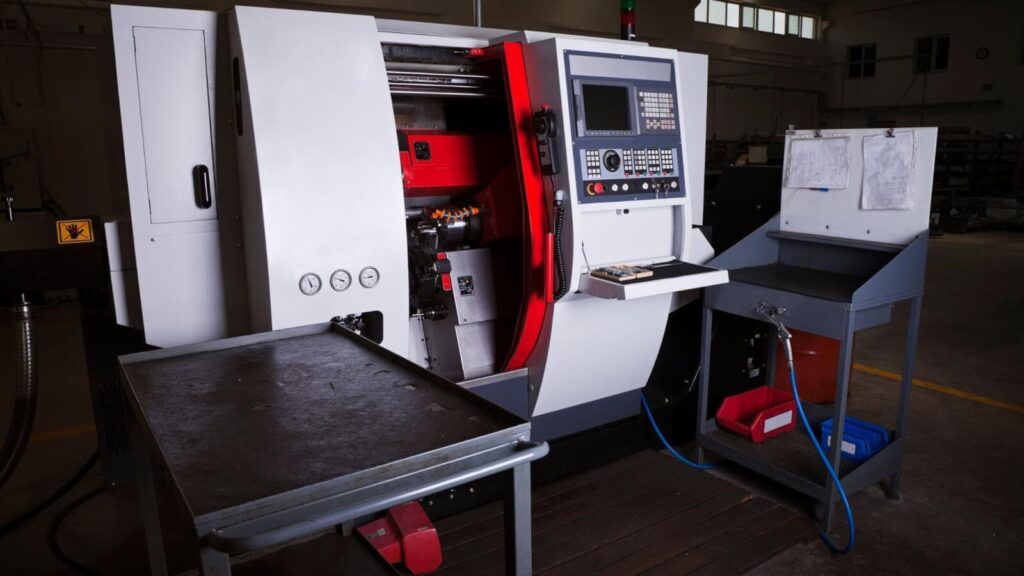
CNC spindle failures rarely happen without warning—noise, heat, vibration, and deteriorating surface finish all signal trouble before a breakdown occurs. Discover how to map those warning signs to a practical maintenance checklist that reduces unplanned stoppages in your shop.
The Real Price of an Unplanned Stop
When a spindle fails mid-run, the most obvious cost is time. A machine that isn’t cutting isn’t making money. But the financial damage from unplanned spindle downtime goes well beyond the idle hours. There’s the emergency service call, the expedited parts shipping, the jobs that get pushed back, and the customers who start looking elsewhere.
For most CNC shops, spindle repair or replacement can run anywhere from a few thousand dollars to well over $20,000 depending on the machine and the extent of the damage. That number doesn’t include the ripple effect across your production schedule. A single spindle failure can delay multiple jobs, exhaust your buffer time, and push your entire team into reactive firefighting mode for days at a stretch.
The harder truth is that most spindle failures don’t happen without warning. They build gradually. And with a structured maintenance approach, the majority of them are preventable.
What Your Spindle Is Trying to Tell You
CNC spindles are precise, high-speed systems. When something starts to go wrong, they don’t simply stop—they communicate. The problem is that many shops don’t have a consistent process for listening. By the time the spindle actually fails, the warning signs have often been present for weeks or months prior.
There are four primary signals worth tracking closely.
Noise Changes
A well-maintained spindle has a consistent acoustic profile. Operators who work with the same machine day in and day out often recognize when that sound changes—a new whine, a grinding undertone, or an intermittent chirp that wasn’t there before. These sounds carry meaning. High-pitched whining typically points to bearing distress, while grinding or rattling can suggest debris contamination or lubrication breakdown. If someone on your floor mentions that a spindle “sounds different,” treat that as a maintenance trigger, not a passing comment.
Heat and Thermal Alarms
Spindle bearings are engineered to operate within a defined temperature range. When they start running hot—whether you catch it through a thermal alarm on the controller or by noticing elevated temperatures at the spindle housing—something is generating excess friction. Causes range from bearing wear to lubrication failure to an improperly preloaded spindle assembly. Thermal alarms that recur consistently on the same machine are especially telling. They’re not glitches in the system; they’re data points pointing toward a mechanical cause.
Vibration
Some vibration is normal in any cutting environment. But when vibration becomes inconsistent, increases in amplitude, or persists at low RPM where cutting forces shouldn’t be generating it, you’re likely looking at a balance issue, worn bearings, or measurable spindle runout. Vibration analysis tools can quantify what operators might only sense through touch, and they’re increasingly accessible even for smaller shops. This is one reason controls and monitoring integrators such as LG Hellmann Corp are incorporating sensor-based condition monitoring into modern CNC cells.Vibration analysis tools can quantify what operators might only sense through touch, and they’re increasingly accessible even for smaller shops. This is one reason controls and monitoring integrators such as LG Hellmann Corp are incorporating sensor-based condition monitoring into modern CNC cells.
Surface Finish Degradation
This signal is easy to overlook because it often gets blamed on the wrong source. When parts come off the machine with a rougher finish than expected—and you’ve already ruled out tooling, feeds, speeds, and fixturing—the spindle itself may be the problem. Runout causes inconsistent tool engagement, which shows up as chatter marks or uneven surface texture across the part. If finish quality has gradually declined across multiple jobs and different setups, investigate the spindle before you change anything else.
Translating Warning Signs Into a Maintenance Checklist
Knowing what to look for is only useful if you have a system for acting on it. The goal of a spindle maintenance checklist isn’t to generate paperwork—it’s to build a consistent process that catches small problems before they become large ones.
A practical checklist operates at three intervals: daily, periodic, and condition-based.
Daily checks are fast and primarily sensory. Operators listen for unusual noise during warm-up and initial cuts, note whether thermal indicators have triggered, and observe surface finish on the first parts of a run. These checks take only a few minutes and require no special equipment—just trained attention applied consistently.
Periodic checks go deeper. Depending on machine usage and manufacturer recommendations, these might occur weekly, monthly, or at defined hour intervals. They cover the mechanical and fluid systems that keep the spindle operating within spec:
● Verifying lubrication levels and inspecting for contamination in the oil or grease delivery system
● Checking coolant flow and delivery for blockages that could compromise thermal management
● Testing drawbar pull force to confirm tool clamping integrity is within acceptable range
● Reviewing controller alarm logs for recurring faults, including those that appear minor or self-clear without intervention
Condition-based checks are triggered by warning signs—any time noise, heat, vibration, or finish quality moves outside the normal range for that machine. When a condition-based trigger fires, it should kick off a more thorough inspection immediately rather than waiting for the next scheduled window.
The Warning Signs You Should Never Defer
Not all warning signs carry the same urgency. A slight sound change that appeared once and hasn’t recurred is worth logging and monitoring. But certain patterns demand action rather than a “let’s keep an eye on it” response.
If vibration has been trending upward across multiple jobs or measurement sessions, that’s not a fluctuation—it’s a progression. If thermal alarms are firing repeatedly and no load or coolant issue explains them, the root cause is almost certainly mechanical. If surface finish has worsened across multiple part numbers through different setups, the common thread points back to the spindle.
If your machine shows recurring vibration or thermal alarms, scheduling a Fanuc spindle motor repair evaluation early can prevent a much larger downtime event. Acting on the first consistent signal—rather than waiting to see if the problem resolves itself—is the decision that separates shops with manageable maintenance costs from those dealing with catastrophic failures at the worst possible moment.
Building a Spindle Maintenance Program That Sticks
Document What You Observe
A maintenance checklist is only as useful as the records it generates. When operators note an anomaly, it should be written down with the date, the machine number, and a clear description of what was observed. Over time, those records build a maintenance history that makes it far easier to identify patterns, justify service decisions to ownership, and bring new team members up to speed. Without that history, every failure looks like a surprise—even when it wasn’t.
Assign Clear Ownership
Preventative maintenance falls apart when responsibility is vague. Someone on your team—whether it’s a lead operator, a maintenance technician, or a shop supervisor—needs to own the spindle inspection process. That person doesn’t have to perform every check personally, but they are accountable for making sure checks happen on schedule and that condition-based triggers actually lead to follow-through inspections rather than being noted and forgotten.
Use Your Controller Data
Modern CNC controllers log far more than most shops actually use. Alarm histories, load data, and thermal records are all available and can tell you a great deal about how a spindle is performing over time. Building a habit of reviewing this data during periodic maintenance windows—rather than only pulling it up after a failure has occurred—gives your team a much earlier view of developing problems and more time to plan an appropriate response.
What Preventative Maintenance Costs Versus What It Saves
Preventative spindle maintenance isn’t free. It requires scheduled time, trained attention, and occasional service calls before the machine has technically failed. But the cost comparison with reactive maintenance is straightforward once you’ve been through an emergency repair.
A planned bearing replacement or spindle inspection, carried out during a scheduled maintenance window, typically costs a fraction of what an emergency repair runs after catastrophic failure. More importantly, a planned repair happens on your timeline—not in the middle of a high-priority production run or a tight customer delivery window. The downstream impact on scheduling, throughput, and customer relationships doesn’t show up on the repair invoice, but it’s real and it compounds.
Shops that build consistent spindle maintenance programs into their operations tend to find that the time investment pays back quickly—not just in reduced repair bills, but in the reliability and predictability that makes better scheduling and stronger customer commitments possible.
The Signals Are Already There
The hardest part of preventative maintenance isn’t the work itself—it’s developing the discipline to act on small signals before the situation becomes undeniable. Production schedules are tight. Operators are busy. It’s easy to notice that a spindle sounds slightly different and keep running because the current part still looks acceptable.
That’s often the exact decision that determines whether the eventual repair costs $3,000 or $30,000.
The warning signs for most spindle failures appear well in advance of the actual breakdown. A structured maintenance checklist—one that maps noise, heat, vibration, and finish changes to defined inspection and response protocols—gives your shop the framework to act on those signals before they turn into unplanned stoppages. The system doesn’t need to be complicated. It just needs to be consistent.