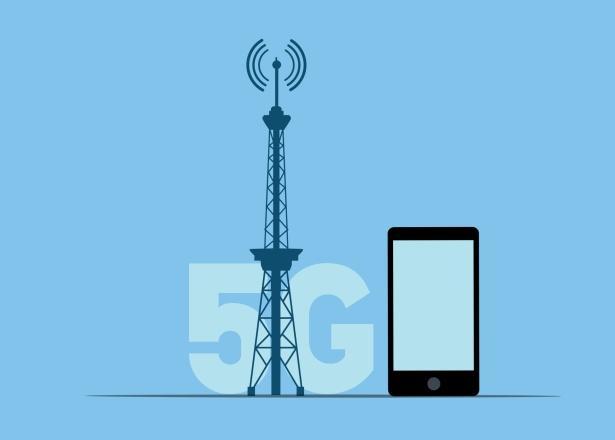
We have grown numb to speed. A webpage loads in under a second. A video streams without buffering. A file downloads while we reach for coffee. None of it surprises us anymore. That numbness, however, hides an extraordinary truth. The infrastructure beneath our daily connectivity is undergoing its most dramatic transformation since fiber replaced copper. 5G is still rolling out… unevenly, but inexorably. And yet, laboratories are already whispering about 6G.
Communication standards evolve in overlapping waves. For businesses, developers, and regular users, the implications stretch far beyond faster streaming. New speeds enable new behaviors, and these demand new standards, thus, the cycle accelerates itself.
Let us untangle where 5G actually stands, what it already enables, and why 6G (still half a decade from prime time) deserves your attention today.
The Current Landscape
Remember the launch hype. Robot cars speak in one millionths of a second. Surgical operations carried out by robot-surgeons remotely. The sensation of a trillion sensors covering each city.
The current 5G in the real world consists of 3 layers. Low-band 5G is only slightly better in coverage than 4G-dull, but still stable. Mid-band 5G is 3-5 times faster than LTE, and the latency is minimal enough to support cloud gaming/live video streaming. High-band millimeter wave (mmWave) is wonderfully fast, with speeds of more than a gigabit per second, but it falls over walls, rain, and even leaves.
The result? A patchwork. Downtown Seoul and Manhattan enjoy mmWave in pockets. Suburban neighborhoods make do with mid-band. Rural areas often see only rebranded 4G… But here is what works right now, reliably, across millions of devices.
Why Low Latency Matters More Than Raw Speed
Speed sells phones. Latency changes industries.
4G latency averages 50 milliseconds. Fine for Instagram. Noticeable for video calls. Frustrating for remote control. 5G can drop to 10 milliseconds on mid-band, and as low as one millisecond on ideal mmWave connections.
That one-millisecond window transforms what computers can do. A factory robot no longer waits for instructions. A drone no longer hesitates before avoiding a collision. A gamer no longer gets interrupted in an intense match while sports betting online.
New Technologies That 5G Has Already Unlocked
Some innovations require the full 5G toolkit: speed, latency, and connection density. Here is where the present becomes exciting.
The Transition to 6G
If 5G connects people to things, 6G will connect everything to everything else. The target date for initial standards is roughly 2030. Commercial deployment will follow toward 2032–2035… But researchers are not waiting.
Terahertz Frequencies and the Death of Wires
6G will push into terahertz frequencies, far above 5G’s millimeter wave. The upside? Theoretical speeds of one terabit per second. That is one thousand times faster than the best 5G today. Download a fifty-gigabyte game in under half a second.
The downside? Terahertz waves barely penetrate a sheet of paper. Indoor use only. Short ranges. The engineering challenge is immense. Early prototypes use intelligent surfaces… literally walls covered in tiny antennas that reflect signals around corners.
When this works, wired connections become obsolete for almost everything. Your home router disappears. Your laptop connects directly to a ceiling node. Latency drops below one millisecond consistently.
AI-Native Networks: Self-Healing, Self-Optimizing
Today’s networks are rule-based. Engineers write parameters. The network follows them. 6G networks will be AI-native. Machine learning models will allocate spectrum, reroute traffic around interference, and predict failures before they happen.
Imagine a stadium concert. A million devices all streaming simultaneously. A 6G network would detect congestion forming on one sector and shift users to adjacent sectors seamlessly—without a single buffering wheel. That is software-defined radio with reinforcement learning. Prototypes exist in academic labs today.
Holographic Communication and the Spatial Web
Here is where 6G becomes genuinely strange. With terabit speeds and sub-millisecond latency, holographic rendering becomes feasible. Not the fake holograms of sci-fi movies, but volumetric video captured by multiple cameras and streamed to lightweight glasses. A business meeting becomes a shared virtual space. No headsets required—just ordinary glasses and a 6G connection.