There’s something really sad about a damaged photo. Maybe it’s that torn edge ruining someone’s smile, or years of fading that have dulled your grandmother’s expression.
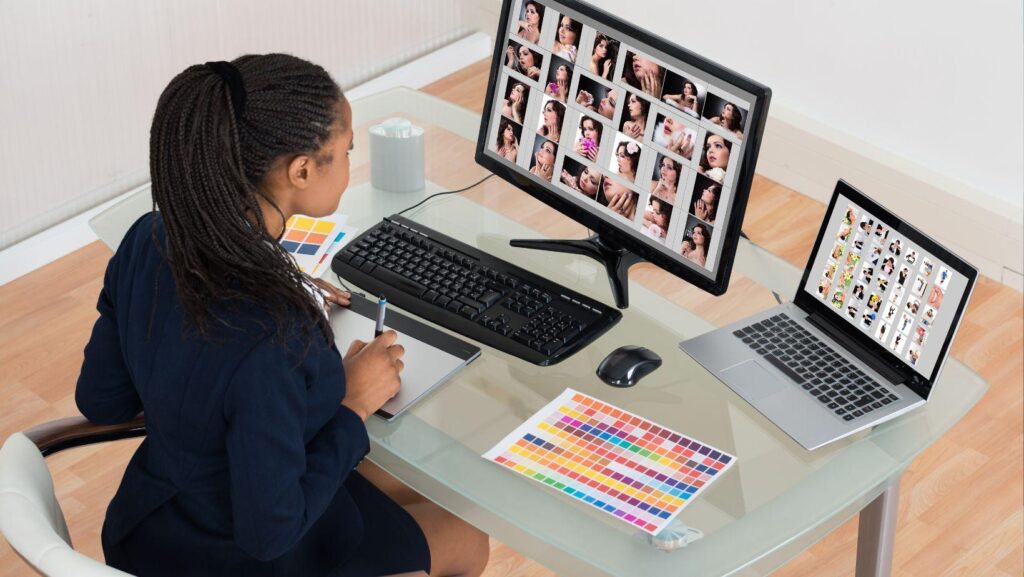
For a long time, fixing these issues meant manual retouching. People would spend hours in Photoshop with clone stamps and healing brushes. The best retouchers did great work, but it was always slow, expensive, and pretty tiring.
Artificial intelligence has shifted everything. Today’s AI tools don’t simply patch photos. They seem to truly understand them. In most cases, they produce faster results that can even surpass what a human hand achieves alone.
To see this technology in action without spending years learning complex software, a dedicated photo restoration app can transform your damaged family history in seconds rather than days.
The Hidden Flaws of Manual Editing
Let us be clear: professional manual retouchers are artists. They do incredible work. But they work within severe constraints that no amount of talent can overcome.
The first constraint is time. A human being can only look at one pixel at a time. Fixing a single scratch across a face might involve hundreds of individual brush strokes. A photo with multiple types of damage—tears, fading, dust, and missing details—can easily consume an entire workday. Most people cannot afford to pay for ten hours of skilled labor per image.
The second constraint is imagination. When a manual editor encounters a missing piece of an eye or a destroyed section of a lip, they must guess. They sample nearby skin, warp it into place, and hope it looks natural. The result is often serviceable, but rarely perfect. The human brain is simply not designed to reconstruct complex organic structures from incomplete data.
The third constraint is consistency. After fixing fifty scratches on a single face, even the most patient editor grows tired. Patterns repeat. Textures become smudged. The final image often loses the natural grain and authenticity of the original photograph, taking on a waxy, over-processed appearance.
How AI Sees What Humans Cannot
Here’s the main difference: AI photo restoration doesn’t work like traditional hand retouching at all.
A person usually fixes damage piece by piece. AI, on the other hand, looks at the full picture and predicts what the undamaged original probably looked like. It’s trained on massive collections of actual photographs, which teach it how real faces, textures, lighting, and film should appear.
With enough training, the system becomes quite skilled at separating genuine image content from common issues like scratches, stains, fading, or damage from years of poor storage.
How the Restoration Process Works
When a damaged image is uploaded, the AI quickly scans the entire photo and identifies visible problems such as:
- Scratches and cracks;
- Tears and missing corners;
- Dust and stains;
- Faded colors;
- Blur caused by aging prints;
- Chemical discoloration.
Unlike manual restoration, which often requires hours of detailed editing, AI processes the entire image simultaneously.
The system then:
- Separates original image content from physical damage;
- Detects overlapping flaws that are difficult for the human eye to isolate;
- Rebuilds missing sections using patterns learned from similar photographs;
- Restores damaged facial details, clothing, and backgrounds naturally;
- Preserves the original structure of the image rather than creating artificial edits.
Intelligent Color and Texture Recovery
Older photos often lose their original tones due to aging and poor storage conditions. AI restoration systems can analyze surrounding colors and lighting to determine which areas are naturally faded and which are affected by stains or chemical damage.
Modern restoration models can also:
- Recover more natural-looking skin tones;
- Improve faded skies and backgrounds;
- Correct uneven discoloration;
- Restore contrast and lighting balance;
- Reintroduce realistic film grain and texture.
This helps the final image retain the appearance of a genuine old photograph rather than looking overly smooth or digitally altered.
Why AI Restoration Is Faster
A heavily damaged photo with tears, fading, dust, and missing details can easily take a professional retoucher many hours to repair manually. AI restoration dramatically reduces that time.
In many cases, the full process finishes in under a minute while still producing detailed and realistic results. This makes photo restoration:
- Faster for large collections of images;
- More affordable for everyday users;
- Accessible without advanced editing skills;
- Practical for restoring family archives and historical photos;
- Efficient for handling multiple damaged images at once.
The Impossibility Zone
There is a specific category of damage where AI leaves manual editing completely helpless. Consider a torn photograph where the rip passes directly through a person’s eye, removing the pupil and iris entirely.
A human editor faces an impossible choice. They can leave the eye incomplete, creating a disturbing ghostly effect. They can steal an eye from another photograph, which never quite matches the lighting angle. Or they can paint something entirely new, which is essentially fiction.
AI handles this differently. Because it has analyzed thousands of human eyes in every possible lighting condition, it understands the anatomical relationship between the iris, pupil, eyelid, and surrounding shadow. It generates a unique eye that fits the specific geometry and lighting of your photograph.
The result is not a copy of another eye. It is a statistically perfect reconstruction of what was likely there before the damage occurred.
Preserving Character, Not Erasing History
A lot of people worry that AI restoration alters the original photo in unwanted ways. They claim manual retouching stays truer to the image since it only repairs visible issues. Yet this argument overlooks what damage really is.
After all, a water stain or a tear didn’t belong to the photograph when it was first taken. Those are just signs of time and accidents taking their toll. Preserving them doesn’t honor history — it simply holds onto the deterioration.
Thankfully, today’s smarter AI applications, including Renew old photo, offer a more thoughtful solution. They let you fine-tune the process so you stay in control.
- Fix serious problems while preserving the gentle fading that gives the photo its soul.
- Repair missing details in faces, but keep the aged tones and edges that reflect its real era.
- Achieve this balance without the exhaustive work that manual editing usually demands.
This way, the restored image feels both refreshed and genuine.
The Final Verdict
When restoring most old photos, AI has a real advantage. It handles family pictures, wedding portraits, and similar keepsakes much faster than traditional methods — often by hundreds of times — while costing a fraction of the price. In cases with missing data, it can even deliver better accuracy.
That doesn’t mean human experts are obsolete. They still matter for rare artifacts in museums that require absolute precision. But for the everyday photos in your albums and boxes, AI usually wins.
Ask yourself a few things before deciding. How quickly do you need it back? Does the expense match the photo’s value? Is the damage quite severe with lost features? And do you care about keeping the authentic film texture? Answering yes to speed, no to high cost, and yes to the rest points straight to AI.
In the end, it’s humans and machines working together to bring the past alive again.