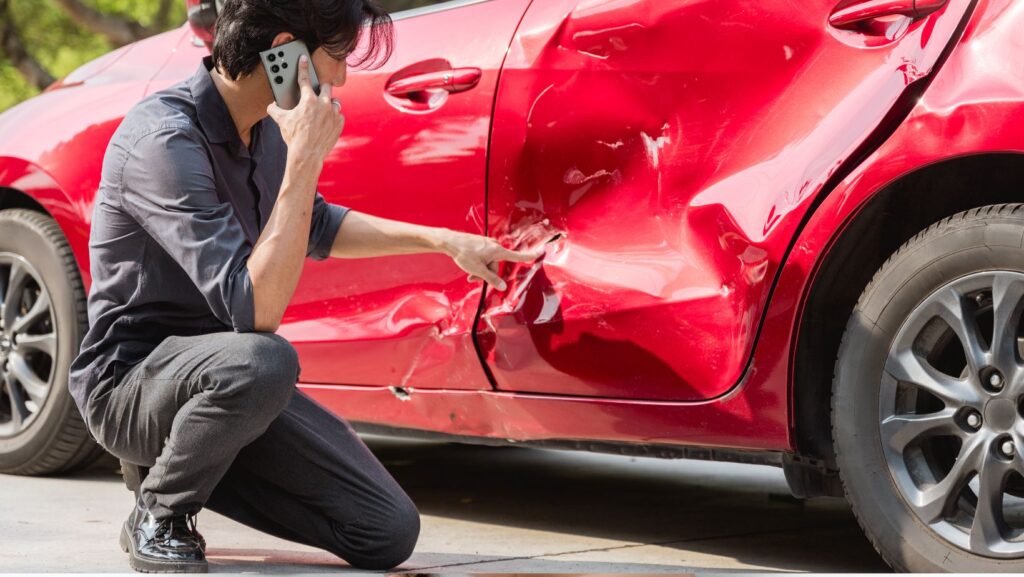
The moments right after a car accident are chaotic and overwhelming. Your heart is racing, you may be in pain, and you are trying to process what just happened. But those first few minutes at the scene are also the most important window you have to capture evidence that could determine the outcome of your legal claim. Once vehicles are moved, roads are cleared, and time passes, critical evidence disappears forever.
Your smartphone gives you the ability to document everything in real time. Photos, videos, voice memos, and even timestamps all become valuable pieces of evidence when properly captured. Knowing exactly what to document and how to do it effectively transforms your phone from a communication device into a case-building tool. The better your documentation, the stronger your position becomes when insurance companies and attorneys start asking questions.
Start With the Overall Scene Before Anything Is Moved
The very first thing you should do when it is safe to do so is capture the overall scene before any vehicles are moved. Wide-angle photos and video give context that close-up shots cannot provide. They show the relationship between vehicles, the road layout, and the surrounding environment at the moment of the crash.
Walk around the entire scene and record a continuous video before taking individual photos. This creates an unedited, time-stamped visual record of exactly how everything looked immediately after the accident. Courts and insurance adjusters find continuous video particularly compelling because it is harder to dispute than a selection of individual photographs.
Document the Vehicles From Every Angle
Damage that seems minor in person can tell a significant story when examined by an accident reconstruction expert. Here is what to photograph on every vehicle at the scene:
- All four sides of every vehicle involved, including the roof if damage is visible from above.
- Close-up shots of every area of impact, dents, scrapes, broken glass, and deployed airbags.
- Tire conditions including any blowouts, worn tread, or damage that may have contributed to the crash.
- License plates of every vehicle involved captured clearly and legibly.
- VIN numbers visible through the windshield of each vehicle for accurate identification.
- Undercarriage damage if visible and safe to access without putting yourself at risk.
Every angle you capture is one less gap the opposing party can exploit when disputing the extent of the damage.
Capture Road Conditions, Signage, and Environmental Factors
The road itself tells an important part of the story. Skid marks, debris fields, potholes, faded lane markings, and missing or obscured signage can all be contributing factors to a crash. These details disappear quickly once road crews arrive or traffic resumes. Capturing them immediately is essential.

Documenting the full environment around the crash scene is one of the most overlooked but critical steps after an Illinois car accident that victims consistently miss. A photo of a faded stop sign or a blocked traffic signal can shift liability significantly in your favor. Your attorney can use this environmental documentation to build arguments that go well beyond driver behavior alone.
Photograph All Visible Injuries Immediately
Documenting your injuries at the scene is just as important as documenting the vehicles and road conditions. Bruises, cuts, swelling, and abrasions are most visible immediately after the accident and can fade or change in appearance within hours. Capturing them early creates a direct visual link between the crash and your physical harm.
Take close-up photos of every visible injury on your body. Do not overlook areas that might seem minor, such as small cuts on your hands or redness around your seatbelt area. These details often become significant later when the insurance company tries to argue that your injuries were not serious or were caused by something other than the accident.
Record Video Statements From Witnesses Before They Leave
Witnesses are one of the most valuable forms of evidence in any car accident case, and they are also the easiest to lose. People leave the scene quickly, memories fade, and contact information gets misplaced. Recording a brief video statement from a willing witness at the scene captures their account while it is freshest and most accurate.
Ask each witness to state their name, what they saw, and where they were standing when the accident occurred. Even a thirty-second video statement is valuable. Combine this with written contact information and you have a witness record that your attorney can follow up on during the investigation phase of your case.
Capture Traffic Camera and Business Surveillance Camera Locations
Many accident victims never think to look for nearby surveillance cameras at the scene. Traffic cameras, business security systems, ATM cameras, and doorbell cameras may have captured the crash on video. That footage can be the most powerful evidence available, but it disappears fast when not preserved in time.
Walk the perimeter of the scene and photograph the location of every visible camera pointed toward the road or intersection. Note the names of nearby businesses that may have exterior cameras. Your attorney can send legal preservation notices to those businesses immediately, requiring them to hold onto their footage before it is automatically deleted. A few photographs of camera locations could lead to video evidence that changes the entire outcome of your case.
Organize and Back Up Everything Before You Leave the Scene
Capturing great evidence means nothing if it gets lost, deleted, or damaged before your attorney can use it. Before you leave the accident scene, take a few minutes to make sure all your documentation is safely backed up and organized. This simple step protects everything you worked to capture in those critical moments.
Enable automatic cloud backup on your phone so that photos and videos are uploaded in real time as you take them. Send copies of the most important images to a trusted family member or friend right away as an additional backup. Label your photos with brief descriptions while the details are still fresh in your mind. A well-organized and safely backed-up collection of evidence gives your attorney exactly what they need to build the strongest possible case on your behalf.