A certificate on a clinic’s website does its job. You see a seal, an issuing body, a date, and some of the worry lifts.
But stem cell clinic accreditation answers a narrower question than most assume. It says a facility met defined standards on a particular day for particular activities. It doesn’t say the treatment works or that the person giving it is qualified.
What Should Patients Check on a Clinic’s Accreditation Certificate?
Read it properly. Note who issued it, which site it names, when it expires, and which services it covers. Then check that against the accrediting body’s own register rather than the clinic’s word.
Bodies such as the Foundation for the Accreditation of Cellular Therapy (FACT) accredit specific services, not a company as a whole. A certificate can be genuine and still cover far less than its position on the wall suggests.
Does the Accreditation Cover the Clinic, the Laboratory, or Both?
Stem cell clinic accreditation is rarely as broad as it looks. This is the part that trips people up.
The credential might attach to a processing laboratory, a collection service, a clinical program, or a department within a larger group. FACT standards treat clinical, collection, and processing activities as distinct.
So ask which site, which department, which service. If your cells are collected in one place, processed elsewhere, and returned to a third location, each stage needs its own answer.
What Other Credentials Should You Check Besides Accreditation?
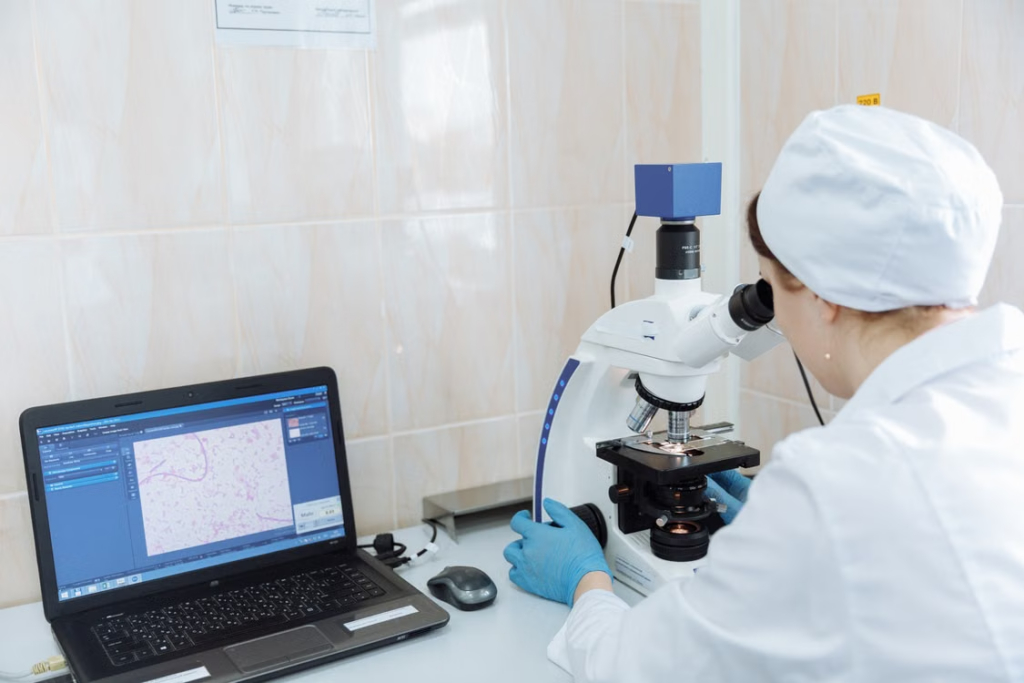
Once you know what the certificate covers, look at the people.
Ask what the treating doctor is trained in and whether they are licensed in the jurisdiction where the treatment occurs, which isn’t always where the clinic is headquartered. An accredited stem cell clinic still has to clear those checks separately.
That applies to Swiss Medica or anyone else. A roundup of the best stem cell therapy clinics in the world helps build a shortlist, but it isn’t a verdict on any of the names on it. Check each one.
How Can You Tell Whether the Treatment Itself Is Supported by Evidence?
Accreditation describes a facility. Evidence describes a treatment.
Evidence doesn’t travel well either. A study of one cell type, prepared one way and delivered by one route for one condition, says little about any other combination. Ask for the studies behind the exact proposal made to you, not the field in general.
Start with what regulators have actually approved. The U.S. Food and Drug Administration says the only stem cell products approved in the United States are blood-forming cells taken from umbilical cord blood, for disorders of the blood. Not knees. Not multiple sclerosis. Not macular degeneration.
The International Society for Stem Cell Research suggests a sharper question than most patients think to ask: Who approved this protocol, and when does that approval expire?
What Should a Clinic Explain Before You Sign Informed Consent?
Nothing in a consent form should come as news. If it does, the conversation happened too late.
You should already know what will be done, what can go wrong, and what the alternatives are, including leaving it alone. Then ask the practical questions. Who does the follow-up? Who is liable if it goes wrong? What is the full cost?
Where a treatment is unproven, the ISSCR says patients should be informed of this.
What Are the Red Flags of Questionable Stem Cell Clinics?
Warning signs show up in how a clinic handles ordinary questions. Be wary of a provider that:
The ISSCR puts it bluntly: a claim that a procedure carries no risk is itself a warning sign.
A Patient’s Stem Cell Clinic Accreditation Checklist
Before you commit, ask:
No single answer settles it. It’s the pattern across all six and how willingly they come.
In Conclusion
An accredited stem cell clinic has met a defined set of standards, and that counts. It can’t carry the whole decision. You still need to know what it covers, who provides the care, what supports the treatment, and how openly the clinic discusses what it can’t prove. If you’ve researched a clinic yourself, what made you look closer?