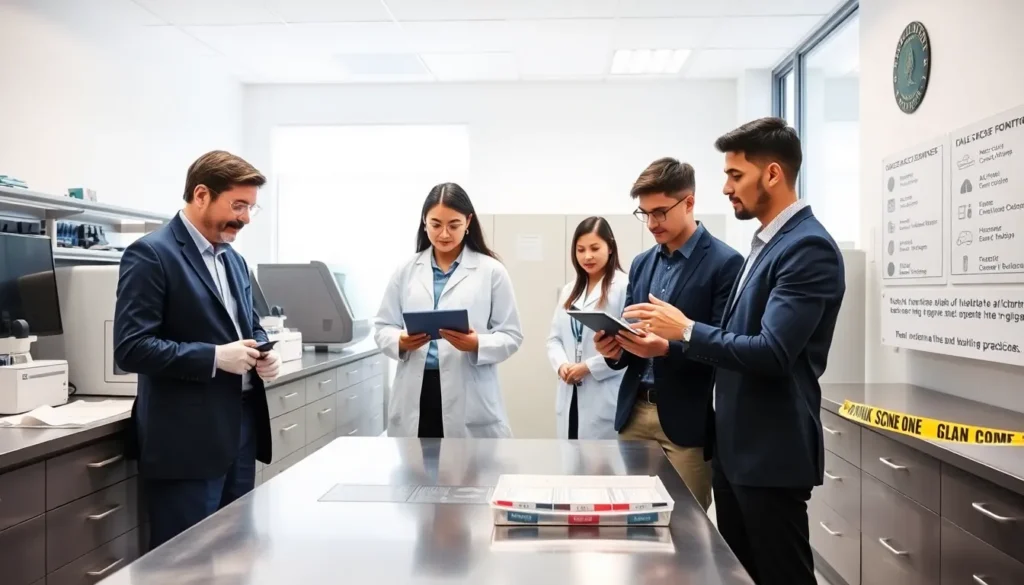
Forensic science college offers students practical training and scientific theory from day one. The program trains students to collect evidence, analyze samples, and write clear reports. Many students choose this field for the mix of lab work and public service.
Key Takeaways
- Choose a forensic science college with accreditation, modern labs, clear curriculum, and low lab-to-student ratios to ensure industry-standard training.
- Match program level—certificate, associate, bachelor’s, master’s, or PhD—to your career goals and time commitment for the best ROI.
- Prioritize schools with strong internship placement, research opportunities, and local agency links to build practical experience and job-ready networks.
- Prepare admissions by completing prerequisite biology and chemistry courses, documenting lab skills, and collecting transcripts, test scores, and recommendations.
- Develop precise lab techniques, chain-of-custody practices, and clear report-writing to stand out to employers and succeed after graduating from a forensic science college.
Why Study Forensic Science?
Forensic science college prepares students for roles in criminal justice and public health. The field applies biology, chemistry, and physics to real cases. Students learn how to interpret data and present findings in court. Employers seek graduates who can work under pressure and follow strict procedures. They value accuracy, chain-of-custody skills, and clear documentation. Forensic work can affect case outcomes and public safety. Many students choose forensic science college because it offers a clear path to hands-on work in a lab and frequent interaction with law enforcement. The program also builds transferable skills in analysis, writing, and teamwork.
Types Of Forensic Science Programs
Forensic science college programs vary by level and focus. Applicants should match program type to career goals.
Certificate Programs
Certificate programs at a forensic science college deliver focused skills quickly. They teach evidence collection, basic lab methods, and crime-scene protocols. Professionals use certificates to gain new skills or meet employer requirements. Certificates often take months to one year to finish.
Associate, Bachelor’s, Master’s, And PhD Options
An associate degree from a forensic science college prepares students for entry-level lab roles. A bachelor’s degree provides broader science training and higher job prospects. A master’s degree emphasizes advanced lab techniques and research methods. A PhD prepares students for high-level research, teaching, or specialized forensic leadership. Each level includes lab time, technical courses, and writing assignments. Students pick levels based on desired roles and time they can commit.
How To Choose The Right College
Prospective students should compare programs at multiple forensic science college options. They should look for clear course lists, hands-on labs, and practical assessments. Cost and location also matter. Students should contact faculty and ask for sample syllabi. They should visit labs when possible and talk to current students.
Accreditation, Curriculum, And Facilities
Accreditation signals that a forensic science college meets quality standards. Accredited programs follow industry guidelines and prepare students for certification. The curriculum should cover biology, chemistry, evidence handling, and legal procedures. Facilities should include working labs, modern instruments, and secure evidence rooms. Students should confirm lab-to-student ratios and access hours.
Internships, Research Opportunities, And Industry Links
A strong forensic science college connects students with local agencies. Internships provide on-the-job experience and networking. Research projects let students practice methods under faculty supervision. Industry links help graduates find entry jobs. Students should ask about internship placement rates and research funding.
Admissions Requirements And Preparation
Admissions vary across forensic science college programs. Applicants should review each program’s requirements early. They should prepare transcripts, test scores, and letters of recommendation. Some programs expect lab experience or relevant volunteer work.
Prerequisite Courses, Test Scores, And Experience
Most forensic science college programs require high school or college-level biology and chemistry. Applicants often submit ACT or SAT scores for undergraduate entry. Graduate programs usually need a relevant bachelor’s degree and GRE scores in some cases. Practical experience, such as lab work, crime-scene volunteering, or internships, strengthens applications. Students should list specific lab techniques they know and describe their role in projects.
What To Expect During The Program
Students at a forensic science college balance classroom learning and hands-on practice. Faculty grade practical work and written reports. Time management proves essential. Students should expect strict safety rules and detailed protocols.
Core Coursework, Labs, And Fieldwork
Core courses at a forensic science college cover forensic biology, forensic chemistry, toxicology, and crime-scene methods. Labs teach microscopy, DNA extraction, chromatography, and evidence packaging. Fieldwork lets students practice scene documentation and basic evidence recovery. Labs emphasize accuracy and reproducible methods.
Capstone Projects, Theses, And Practical Assessments
Many forensic science college programs require a capstone project or thesis. Students design experiments, collect data, and present results. Practical assessments test skills like fingerprint analysis and DNA interpretation. Faculty evaluate both technical skill and report clarity.
Cost, Financial Aid, And Return On Investment
Costs vary across forensic science college programs. Students should calculate tuition, fees, and lab costs. They should factor in supplies and travel for internships. Financial aid reduces out-of-pocket costs.
Tuition Ranges, Scholarships, And Assistantships
Public forensic science college tuition typically runs lower for in-state students. Private programs often cost more. Scholarships and grants target science majors and underrepresented students. Graduate students may qualify for teaching or research assistantships that cover tuition and pay a stipend. Students should apply early for scholarships and compare aid offers. They should also look for employer tuition support if they work for law enforcement or public health agencies.
Career Paths, Certification, And Job Outlook
Graduates from a forensic science college enter labs, law enforcement units, and public health roles. Employers include state crime labs, medical examiners, and private labs. The field rewards precision and steady judgment.
Common Roles, Certification Bodies, And Continuing Education
Common roles include forensic technician, DNA analyst, toxicologist, and crime-scene investigator. Certification bodies include the American Board of Criminalistics and state agencies. Many jobs require ongoing training and periodic certification renewal. Graduates should plan for continued learning to keep skills current.
Job Market Trends And Tips For Getting Hired
Demand for forensic analysts grows with case volume and technology use. Graduates who show lab experience and good report-writing skills find work faster. Networking, internships, and clear portfolios of work help applicants. Employers favor candidates who show attention to procedures, steady hands in the lab, and clear courtroom communication.