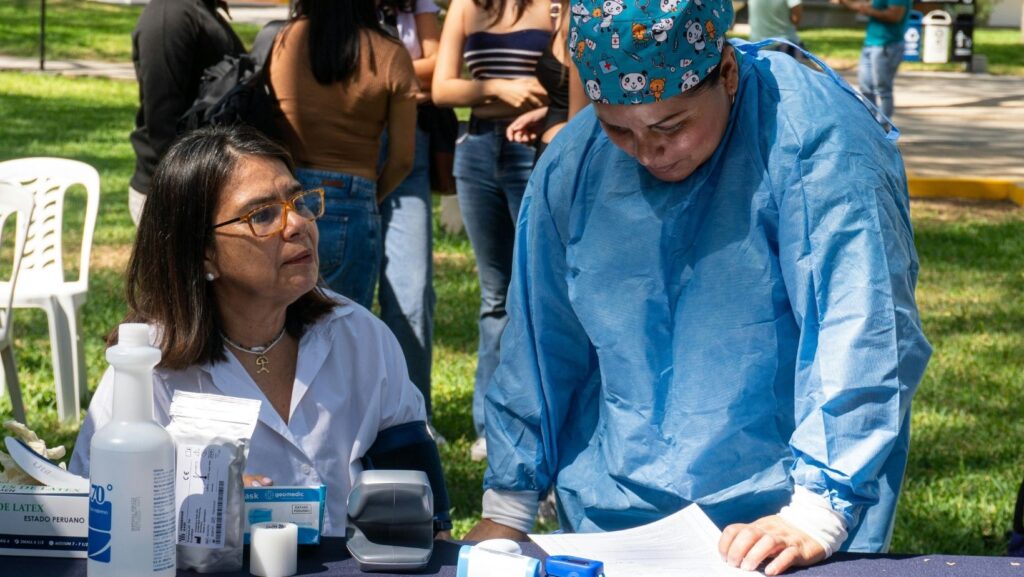
Large events in South Africa bring thousands of people together in concentrated spaces, and with that comes a real responsibility for organisers to plan for medical risk. A well-structured event medical solution protects attendees and gives you, as the organiser, the confidence that any incident will be handled quickly and professionally.
We walk through what to consider when choosing an event medical solution, including the risks involved, the levels of cover available, and the staffing and infrastructure needed to keep a large-scale event safe from start to finish.
Understanding the medical risks at large events
Understanding these risks upfront is the foundation of any effective medical plan, ensuring response capacity is matched to the realistic challenges of the event.
- Common medical presentations: These include heat exhaustion and dehydration, which are frequent, particularly at outdoor events or during prolonged standing.
- Alcohol and substance-related incidents: These tend to spike at concerts and festivals, requiring dedicated response capacity.
- Crowd density dangers: Although these are usually preventable with proper planning, crush injuries and trampling can occur, and should have dedicated response planning.
- Acute medical emergencies: Cardiac events, asthma attacks, and diabetic emergencies become more complex to manage when access routes are congested at large events.
- Environmental factors: Extreme weather and poor ventilation can increase the likelihood of medical incidents.
What event medical solutions cover
First-Aid response
At their core, an event medical solution provides first aid for minor injuries and ailments, including cuts, sprains, blisters, dehydration, and headaches. These issues can be handled by qualified first-aiders stationed at fixed medical points.
Advanced Life Support and emergency care
More advanced cover extends to Basic and Advanced Life Support paramedics equipped to manage cardiac arrests, severe allergic reactions, asthma attacks, fractures, and trauma. During an event, this is usually supported by on-site ambulances ready for immediate transport to the hospital.
Medical command and infrastructure
Larger events typically include a dedicated medical command structure, triage areas, treatment tents with stretchers and oxygen, and clear communication links to event control and local emergency services.
The role of a medical command centre
For larger or higher-risk events, a medical command centre serves as the operational centre of the on-site healthcare response. Rather than relying on individual paramedics to make isolated decisions, a command centre provides centralised oversight and significantly improves response times and outcomes.
Beyond live incident management, a command centre also serves as the integration point between the medical team and external stakeholders, like event organisers. It also provides a documented record that protects both the attendee and the integrity of your event.
Staffing and personnel requirements
First-aiders
At the entry level, qualified first-aiders handle the bulk of routine presentations: minor injuries, dehydration, blisters, and basic stabilisation until higher-level support arrives.
Basic Life Support (BLS) practitioners
Above them, Basic Life Support (BLS) practitioners are equipped to manage more serious cases, including airway support, oxygen administration, and patient transport.
Advanced Life Support paramedics
Advanced Life Support (ALS) paramedics extend the clinical capability further, with ALS-qualified staff able to administer scheduled medications, perform advanced airway interventions, manage cardiac arrests, and run trauma resuscitations on-site.
Conclusion
Planning event medical solutions is ultimately about preparing for the moments you hope never happen. Every event carries its own risk profile and regulatory requirements. However, the principle remains the same: response capacity must match realistic worst-case scenarios.
Working with an experienced event medical provider takes the guesswork out of this process. From risk assessment and personnel planning to on-the-day coordination and post-event reporting, a trusted partner ensures every layer of the response is properly resourced.