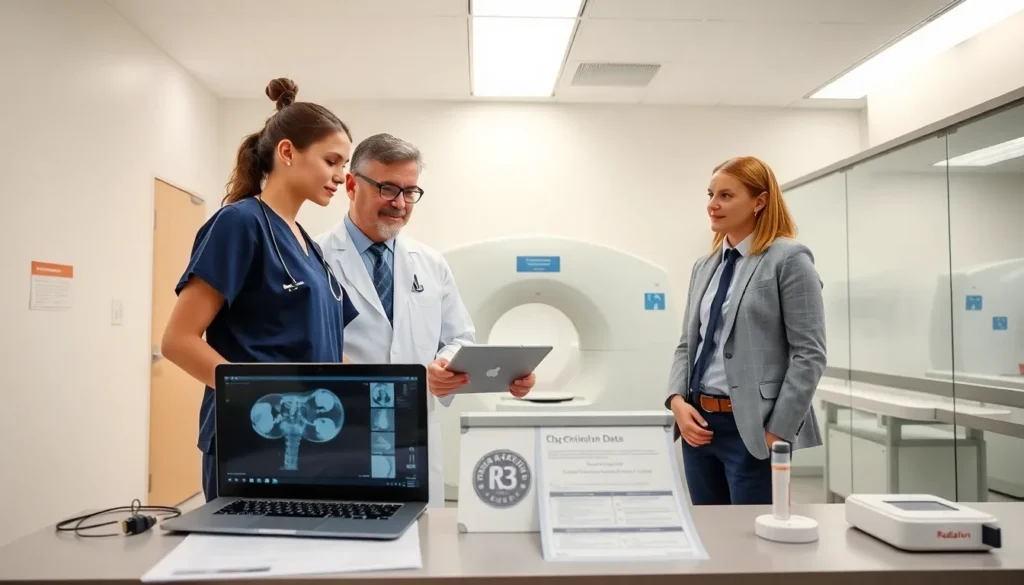
A radiation science degree prepares students to work with medical imaging and therapy technologies. It gives students technical knowledge, clinical skills, and safety training. The program suits students who like physics, anatomy, and patient care. The introduction explains program goals, common careers, and entry expectations.
Key Takeaways
- A radiation science degree trains you to operate imaging and therapy equipment, apply radiation safety, and qualify for clinical roles like radiologic technologist or radiation therapist.
- Choose program level—associate for entry-level clinical jobs, bachelor’s for supervisory roles, and master’s for advanced clinical, physics, or research careers—to match your career goals.
- Confirm programmatic accreditation (e.g., JRCERT), clinical affiliation, graduation and certification pass rates, and required clinical hours before applying.
- Prepare a strong application with prerequisite coursework (algebra, chemistry, anatomy), a competitive GPA, documented patient-contact or lab experience, and clean background/immunization checks.
- Maintain and advance your career through ARRT or board certification, required continuing education, and specialty or graduate degrees to increase pay and leadership opportunities.
What Is A Radiation Science Degree And Who Should Pursue It
A radiation science degree trains students to operate imaging and treatment equipment and to apply radiation safety. Students learn physics, anatomy, patient positioning, and clinical protocols. The degree leads to roles in hospitals, clinics, research labs, and industry.
Who should pursue this degree? Students who like hands-on technical work and patient contact should consider it. Students who enjoy problem solving and steady procedures will fit well. Students who prefer lab work or research can aim for advanced roles.
The degree can start at the associate, bachelor’s, or master’s level. An associate degree can qualify a student for entry-level clinical roles. A bachelor’s degree can open supervisory and technical specialist roles. A master’s degree can lead to advanced clinical, physics, or research positions.
Admissions often require science coursework and clear criminal background checks. Clinical programs require immunizations and drug screens. Students should plan early for these requirements.
Common Specializations And Career Paths
Programs divide into clinical and technical tracks. Each track leads to distinct jobs and certification paths.
Clinical Radiography, Radiation Therapy, And Nuclear Medicine Roles
Clinical radiography trains students to perform X-rays, CT scans, and some fluoroscopic procedures. Graduates often work as radiologic technologists in emergency departments and outpatient centers. Radiation therapy programs train students to deliver targeted radiation to treat cancer. Graduates work with oncologists and medical physicists in cancer centers. Nuclear medicine programs train students to handle radiopharmaceuticals and to perform PET and SPECT imaging. Graduates work in diagnostic imaging and cardiology clinics.
Medical Physics, Health Physics, And Research-Oriented Roles
Medical physics roles require advanced study and focus on imaging physics, treatment planning, and equipment calibration. Health physics roles focus on radiation protection in hospitals, industry, and government. Research roles involve study design, protocol execution, and data analysis in universities or companies. These roles often require a master’s or doctoral degree.
Curriculum, Core Courses, And Learning Outcomes
Programs set clear learning outcomes. Students must demonstrate technical skill, clinical judgment, and safety practice. The curriculum blends lectures, labs, and clinical hours.
Typical Core Courses And Laboratory Components
Core courses include anatomy, physiology, radiation physics, imaging principles, and radiation biology. Students take labs in equipment operation, image acquisition, and basic maintenance. Courses teach dose measurement, shielding calculations, and exposure limits. Programs include instruction in patient care, medical ethics, and infection control.
Clinical Placements, Internships, And Capstone Experiences
Clinical placements place students in hospitals and clinics for hands-on practice. Internships provide focused experience in a specialty such as CT, MRI, or therapy. Capstone projects require students to solve a real clinical or technical problem and to present findings. Programs track clinical competencies and require minimum clinical hours before graduation.
Admissions Requirements And How To Prepare Your Application
Admissions require transcripts, test scores in some programs, and letters of recommendation. Programs expect a foundation in math, chemistry, and biology. Strong communication and teamwork skills matter.
Prerequisite Coursework, GPA, And Experience Expectations
Prerequisite courses commonly include college algebra, general chemistry, and human anatomy. Programs often require a minimum GPA, typically 2.5 to 3.0. Clinical programs may expect prior healthcare experience or volunteer work. Applicants should document any patient-contact roles or lab experience.
Application Tips And Interview Preparation
Applicants should highlight clinical experience and technical skills on their resume. They should prepare examples that show problem solving and patient care. Interviewers ask about stress management, attention to detail, and ethical scenarios. Applicants should practice concise answers and bring relevant certifications or training records.
Licensing, Certification, And Clinical Training Pathways
Licensing and certification protect patients and standardize practice. Graduates must meet national and state requirements before they practice.
Key Certifications And State Licensing Considerations
The American Registry of Radiologic Technologists (ARRT) offers primary certification for radiography, nuclear medicine, and radiation therapy. Some states require separate state licensure plus to ARRT certification. Medical physicists earn board certification through organizations such as the American Board of Radiology. Employers often require certification during hiring.
Continuing Education And Career Advancement Options
Certified professionals must complete continuing education to maintain credentials. Continuing education can include workshops, online courses, and conferences. Career advancement can follow clinical leadership, education, or specialty certification paths. Professionals may pursue a master’s or doctoral degree to move into research, teaching, or advanced clinical roles.
Job Outlook, Salary Expectations, And Geographic Considerations
Job growth depends on healthcare demand and local demographics. Aging populations increase demand for imaging and cancer treatment. Urban areas often have more job openings and higher salaries. Rural areas may offer sign-on bonuses and faster job placement.
Factors That Affect Salary And Demand
Salary varies by specialization, experience, and certification. Radiation therapists and medical physicists typically earn more than entry-level radiographers. Hospitals pay different rates than outpatient centers and private clinics. Geographic cost of living affects salary offers. Advanced certification and supervisory roles raise pay. Employers value reliability, technical skill, and patient care ability.
How To Choose The Right Program: Questions To Ask And Delivery Formats
Students should compare programs on outcomes, cost, and clinical partners. They should verify accreditation and job placement rates. They should inspect lab facilities and equipment.
Accreditation, Program Reputation, And Clinical Affiliation Questions
Students should ask if the program holds programmatic accreditation such as Joint Review Committee on Education in Radiologic Technology (JRCERT). They should ask about graduation rates, certification pass rates, and employer partnerships. They should ask which hospitals serve as clinical sites and how many clinical hours students complete.
Online Versus On-Campus Programs And Cost Considerations
Some programs offer online coursework with local clinical placements. On-campus programs offer direct access to labs and on-site equipment. Online options suit students who need schedule flexibility. Students should compare total cost, financial aid, and travel requirements for clinical placements.