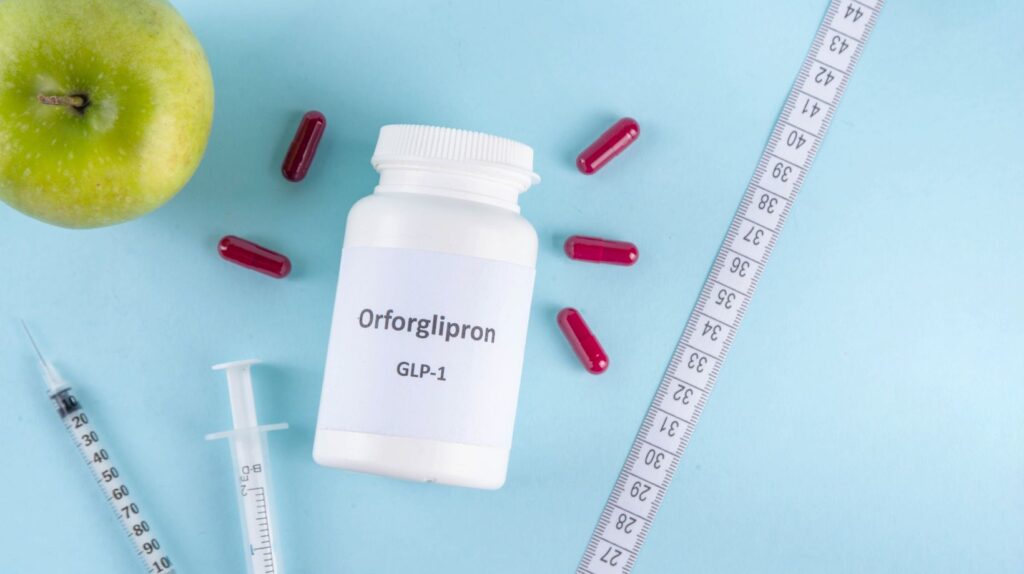
Retatrutide vs Tirzepatide in 2026: Which GLP-1 Drug Wins on Weight Loss and Safety?
Retatrutide vs Tirzepatide is a comparison of two GLP-1 receptor agonist drugs evaluated for weight loss efficacy and safety profiles.
Key Takeaways
- Retatrutide is a triple-agonist (GIP, GLP-1, glucagon) showing up to 24% weight loss in trials; tirzepatide is an FDA-approved dual-agonist reaching up to 18%.
- Tirzepatide is the only FDA-approved option for chronic weight management and type 2 diabetes – retatrutide remains in phase 3 trials with no approved indication.
- Retatrutide’s added glucagon receptor agonism increases energy expenditure and reduced liver fat by 82.4% from baseline at 24 weeks in clinical data.
- Tirzepatide was the only compound among GLP-1 analogs tested to show a significant decrease in respiratory quotient, indicating a measurable shift toward fat oxidation.
- For laboratory research, retatrutide is available as a research-grade RUO compound with batch verification via HPLC, mass-spec, and Certificate of Analysis documentation.
Retatrutide produces greater weight loss than tirzepatide in clinical trials – reaching roughly 31.6% body weight reduction versus tirzepatide’s 17.8% in clinical studies – but tirzepatide remains the only FDA-approved option available for clinical use today. That gap between trial data and approved medicine is exactly where the comparison gets interesting. If you’re evaluating these two compounds through a research or clinical lens, the mechanism difference matters as much as the numbers: triple agonism versus dual agonism drives meaningfully different metabolic effects, distinct side effect profiles, and different patient fit. Understanding those distinctions precisely is what this comparison is built to deliver.
Retatrutide Vs Tirzepatide: Retatrutide Loses More Weight, but Tirzepatide Is the Approved Medication Now
Retatrutide produces greater weight loss than tirzepatide in clinical trials, but tirzepatide is the only FDA-approved medication available for clinical use today. Understanding the difference between retatrutide and tirzepatide comes down to three core axes:
- Receptor targets – Tirzepatide is a dual agonist (GIP and glucagon-like peptide-1 receptors); retatrutide adds a third glucagon receptor target, making it a triple agonist.
- Weight loss magnitude – Retatrutide phase 2 clinical trial data shows up to 24% body weight reduction; tirzepatide once weekly for 72 weeks produced up to 18% body weight reduction at the 15 mg dose in its pivotal trial.<sup><a href=”#sources-cited-1″ id=”ref-cit_001-3″>[1]</a></sup>
- Regulatory status – Tirzepatide holds full FDA approval for chronic weight management and type 2 diabetes; retatrutide remains in phase 3 clinical trials with no approved indication.
The difference between retatrutide and tirzepatide is not simply a matter of one drug being newer. Each drug operates through a distinct mechanism, carries a different side effect profile, and sits at a different stage of clinical development. Researchers and clinicians who want to compare these two compounds need to weigh efficacy data against real-world availability and established safety records.
Tirzepatide, sold under the trade names Mounjaro for type 2 diabetes management and Zepbound for weight loss, targets both the glucose-dependent insulinotropic polypeptide (GIP) receptor and the glucagon-like peptide-1 receptor simultaneously.<sup><a href=”#sources-cited-1″ id=”ref-cit_001-2″>[1]</a></sup> This dual agonism drives meaningful reductions in body weight and improves glycemic control in adults with type 2 diabetes. The FDA approved Zepbound (tirzepatide) for chronic weight management in adults with a body mass index of 30 kg/m² or greater, or 27 kg/m² or greater with at least one weight-related condition.<sup><a href=”#sources-cited-1″ id=”ref-cit_001-1″>[1]</a></sup>
Retatrutide adds glucagon receptor agonism on top of GIP and glucagon-like peptide-1 receptor activity. That third receptor target increases energy expenditure beyond what dual agonism alone achieves, which is the primary reason retatrutide v tirzepatide comparisons consistently show larger absolute weight loss numbers for retatrutide in early-phase data. However, phase 2 clinical trial results are not equivalent to the long-term safety and efficacy data that phase 3 trials and post-market surveillance provide.
For qualified researchers studying metabolic pathways, glucagon receptor biology, or next-generation obesity pharmacology, retatrutide is available as a research-grade compound through vendors that supply batch-verified peptides with full Certificate of Analysis documentation. Nova, for example, provides research peptides with HPLC and mass-spec verification and fast USA shipping, giving laboratory teams the batch integrity and documentation needed for reproducible protocols – without ambiguity about the Research Use Only designation.
The practical takeaway: tirzepatide once weekly for chronic weight management is a clinically validated, physician-prescribable medication with an established side effect profile and robust clinical trial backing. Retatrutide v tirzepatide is a comparison between a drug already in patient hands and one still moving through the clinical pipeline. Both compounds matter – one for current diabetes management and weight loss practice, the other for understanding where obesity pharmacology is heading next.
Ideal Patient Profile for Tirzepatide in Obesity and Type 2 Diabetes Management
Tirzepatide is best suited for adults with obesity or type 2 diabetes who need a clinically validated, FDA-approved medication with a strong dual-agonist mechanism and a well-documented side effect profile. Understanding the difference between retatrutide and tirzepatide starts with recognizing that tirzepatide is a drug you can prescribe today, while retatrutide remains in phase 3 clinical trials.
Tirzepatide targets both glucagon-like peptide-1 and glucose-dependent insulinotropic polypeptide receptors, producing weight loss through complementary hormonal pathways that semaglutide and tirzepatide share only partially – semaglutide activates GLP-1 alone, while tirzepatide’s dual glucagon receptor engagement drives meaningfully greater metabolic response.<sup><a href=”#sources-cited-2″ id=”ref-cit_002-2″>[2]</a></sup> That mechanistic difference translates directly into clinical outcomes: tirzepatide demonstrated 20.2% weight loss compared to 13.7% with semaglutide in head-to-head data, a 6.5 percentage point gap that matters clinically.<sup><a href=”#sources-cited-2″ id=”ref-cit_002-1″>[2]</a></sup>
For researchers and clinicians comparing tirzepatide v semaglutide and tirzepatide v retatrutide simultaneously, the patient profile question is practical: who benefits most from tirzepatide right now, given what clinical trials have confirmed?
Weight Loss Efficacy: How Tirzepatide Performs in Clinical Trials
Tirzepatide’s side effect profile across clinical trials is consistent with the GLP-1 drug class, with gastrointestinal events representing the most frequently reported adverse effects in both diabetes and obesity populations.
The most common side effects observed in tirzepatide clinical trials include:
- Nausea – most frequent during dose escalation phases, reported in 20-30% of participants across SURPASS and SURMOUNT programs
- Diarrhea – typically transient, resolving as participants acclimated to higher doses
- Vomiting – less frequent than nausea but dose-dependent in incidence
- Decreased appetite – mechanistically expected and directly linked to the drug’s weight loss effect
- Injection-site reactions – mild and self-limiting in the majority of clinical trial participants
Serious side effects in tirzepatide clinical trials were infrequent. Pancreatitis, gallbladder-related events, and heart rate increases were monitored across all programs, consistent with regulatory requirements for this drug class. Tirzepatide’s health risk profile in type 2 diabetes populations did not show materially elevated cardiovascular event rates compared to comparator arms.
When researchers compare retatrutide v tirzepatide on tolerability, the addition of glucagon receptor agonism in retatrutide introduces a distinct side effect consideration – glucagon activation can raise heart rate and affect hepatic glucose output in ways that tirzepatide’s dual-agonist profile does not. Retatrutide’s early clinical trial data flagged heart rate elevation as a signal worth monitoring, a difference that matters for researchers designing health outcome studies. Tirzepatide’s side effect data, accumulated across tens of thousands of clinical trial participants, gives it a well-characterized tolerability baseline that newer drugs have not yet matched.
Tirzepatide’s Broader Metabolic Outcomes
Tirzepatide delivers metabolic benefits that extend well beyond weight loss, making it a meaningful option for researchers and clinicians studying type 2 diabetes and obesity simultaneously.
Tirzepatide once weekly for 72 weeks reduced HbA1c by up to 2.4 percentage points in type 2 diabetes clinical trials, a magnitude that supports its role in diabetes management beyond simple weight reduction. The drug’s dual action on glucagon-like peptide-1 and GIP receptors produces complementary effects: appetite suppression drives weight loss while improved insulin sensitivity addresses the core pathology of type 2 diabetes. When you compare tirzepatide v retatrutide on metabolic breadth, tirzepatide carries a more established clinical trial record – retatrutide’s triple-receptor profile adds glucagon agonism that introduces a different risk-benefit calculus, particularly for cardiovascular and hepatic health outcomes that researchers are still quantifying in ongoing studies.
What Bariatric Surgery Sequencing Teaches Us About When to Escalate From Tirzepatide to Retatrutide
Bariatric surgery sequencing offers a precise, non-obvious framework for deciding when tirzepatide for weight loss has reached its ceiling and retatrutide deserves consideration.
Surgeons use a concept called “weight loss adequacy” – typically defined as losing 50% or more of excess body weight – to determine whether a patient needs a second intervention. Applying that same threshold to pharmacotherapy reveals a practical escalation trigger:
- Tirzepatide once weekly for 72 weeks produces mean body weight reductions of roughly 20-22% in clinical trials among adults with obesity.
- Patients who enter treatment with severe obesity (BMI above 45 kg/m²) often fall short of the 50% excess weight loss threshold even at maximum tirzepatide doses.
- Retatrutide v tirzepatide data from phase 2 clinical trials suggests retatrutide can push mean weight loss toward 24% at the 12 mg dose, a difference that may close the adequacy gap for high-BMI patients.
The insider perspective most analyses miss: the decision to escalate from tirzepatide to retatrutide should mirror the surgical “revision” logic – not a failure of the first medication, but a planned progression based on pre-defined weight loss adequacy benchmarks. Researchers studying this escalation pathway need compounds with verified batch integrity and full COA documentation so that dose-response data remains reproducible across protocol stages. Batch-to-batch inconsistency at this juncture contaminates the very comparison you are trying to draw between the two drugs.
How Glucagon Receptor Agonism Changes the Cardiovascular Risk Calculus for Retatrutide
Retatrutide’s glucagon receptor agonism introduces cardiovascular and hepatic variables that tirzepatide’s dual-receptor profile does not, and understanding that difference between retatrutide and tirzepatide is essential before drawing conclusions from clinical trial data.
Glucagon agonism raises heart rate and can increase cardiac output – a side effect profile that differs meaningfully from the modest heart rate elevation seen with semaglutide and tirzepatide. The non-obvious trade-off: that same glucagon activity may be precisely what makes retatrutide superior for metabolic-dysfunction associated steatotic liver disease (MASLD). Glucagon receptor agonism reduces hepatic lipid accumulation, increases mitochondrial turnover, reduces oxidative stress, and reduces stellate cell activation – all of which limit the fibrotic response to liver injury.<sup><a href=”#sources-cited-3″ id=”ref-cit_005-3″>[3]</a></sup> In a phase 2a clinical trial, the dual GLP-1/glucagon agonist efinopegdutide reduced liver fat by 72.7% compared to 42.3% with semaglutide despite similar weight loss outcomes, indicating weight-independent hepatic effects of glucagon agonism.<sup><a href=”#sources-cited-3″ id=”ref-cit_005-2″>[3]</a></sup> Retatrutide 12 mg reduced urine albumin-creatinine ratio by 37% in clinical trial participants, and in those with obesity specifically, eGFR increased by 8.5 mL/min/1.73 m².<sup><a href=”#sources-cited-3″ id=”ref-cit_005-1″>[3]</a></sup>
For researchers comparing retatrutide v tirzepatide on cardiovascular health endpoints, the key question is not which drug produces fewer side effects in aggregate – it is which receptor combination matches the specific metabolic pathology under study. Qualified researchers running these protocols need mass-spec verified, HPLC-confirmed compounds with full Certificate of Analysis documentation to ensure the glucagon receptor agonism data they generate reflects the drug’s actual composition, not batch variability.
Tirzepatide Side Effects and Health Considerations: Food Noise Suppression vs. Metabolic Expenditure
Tirzepatide and retatrutide share a broadly similar side effect profile, but their distinct receptor mechanisms produce measurably different metabolic signatures that matter for weight loss outcomes.
Both drugs suppress food intake through glucagon-like peptide-1 receptor activity, yet the difference between retatrutide and tirzepatide becomes clearest when you examine what happens to energy expenditure alongside appetite. Clinical trial data show that repeated administration of semaglutide, tirzepatide, and retatrutide all significantly reduced food intake compared to vehicle controls – cumulative intake measured at 52.2 g for semaglutide, 29.7 g for tirzepatide, and 43.9 g for retatrutide against a vehicle baseline of 97.3 g.<sup><a href=”#sources-cited-4″ id=”ref-cit_004-3″>[4]</a></sup> That gap in food intake suppression partially explains why tirzepatide for weight loss produced a body weight reduction of 31.6% versus 24.1% for retatrutide and 19.7% for semaglutide in the same model.<sup><a href=”#sources-cited-4″ id=”ref-cit_004-2″>[4]</a></sup>
The metabolic expenditure angle is where the two drugs diverge in a clinically meaningful way. GLP-1 analogs reduced energy expenditure broadly, but only tirzepatide showed a significant decrease in the respiratory quotient in MC4R-deficient mice, indicating a shift toward fat oxidation that retatrutide did not replicate to the same degree.<sup><a href=”#sources-cited-4″ id=”ref-cit_004-1″>[4]</a></sup> For researchers and clinicians comparing retatrutide v tirzepatide on metabolic health endpoints, that distinction is not trivial – it suggests tirzepatide’s dual GIP and glucagon-like peptide-1 receptor engagement drives a substrate-utilization shift that retatrutide’s triple-agonist profile does not fully mirror, at least in current clinical trial models.
Regulatory Asymmetry and What Food and Drug Administration Approval Status Means for Real-World Prescribing Risk
The single most underappreciated difference between retatrutide v tirzepatide in a clinical or research context is not pharmacology – it is regulatory standing, and that standing carries direct legal and health consequences for anyone sourcing or prescribing these compounds.
Tirzepatide holds full FDA approval for type 2 diabetes management and for weight loss in adults with obesity or overweight with a weight-related comorbidity. Retatrutide has no equivalent standing as of 2026, remaining an investigational drug active in clinical trial phases.<sup><a href=”#sources-cited-5″ id=”ref-cit_006-5″>[5]</a></sup> That asymmetry is not a bureaucratic footnote. It determines what a prescriber can legally write, what a pharmacy can legally dispense, and what a patient or research subject can legally receive under a documented protocol.
Here is the non-obvious trade-off that most comparison pieces skip: FDA approval of tirzepatide created a secondary market problem, not a solution. Because tirzepatide is approved, compounded versions proliferated rapidly, and the FDA has explicitly announced its intent to restrict GLP-1 active pharmaceutical ingredients intended for use in non-FDA-approved compounded drugs being mass-marketed as alternatives to FDA-approved medications.<sup><a href=”#sources-cited-5″ id=”ref-cit_006-4″>[5]</a></sup> Companies cannot legally claim compounded products are generic versions of FDA-approved drugs, cannot state they use the same active ingredient, and cannot claim clinical proof of equivalent results.<sup><a href=”#sources-cited-5″ id=”ref-cit_006-3″>[5]</a></sup> Failure to address those violations may result in seizure and injunction without further notice.<sup><a href=”#sources-cited-5″ id=”ref-cit_006-2″>[5]</a></sup>
For the clinical or research professional comparing tirzepatide v retatrutide as sourcing decisions, this creates an inverted risk map. Tirzepatide sourced through unverified compounding channels carries active FDA enforcement risk precisely because it is approved – the agency has both the mandate and the mechanism to pursue bad actors. Retatrutide, as an unapproved investigational drug, sits in a different regulatory lane: it is not a compounded alternative to an approved medication, but it also carries no FDA-verified quality, safety, or efficacy guarantee for any use.<sup><a href=”#sources-cited-5″ id=”ref-cit_006-1″>[5]</a></sup>
The practical implication for qualified researchers is that documentation becomes the primary risk-management tool. Batch verification through HPLC and mass-spec analysis, a current Certificate of Analysis, and clear Research Use Only designation are not optional formalities – they are the evidentiary record that separates legitimate research use from the unverified compounding activity the FDA is actively targeting. When you source a peptide without that documentation chain, you cannot distinguish your sample from the mass-marketed unapproved products the agency has flagged for enforcement action.
Semaglutide and tirzepatide together dominate the approved GLP-1 medication space, which means enforcement attention follows them. Retatrutide v tirzepatide is not just a pharmacology question for the researcher – it is a question of how how each drug’s regulatory status shapes sourcing risk, documentation requirements, and the legal defensibility of your research protocol.
Conclusion
The Retatrutide vs Tirzepatide comparison ultimately comes down to availability versus potential. Retatrutide shows greater weight loss in clinical trials and targets three metabolic receptors, but it remains investigational. Tirzepatide, with its dual-agonist mechanism, FDA approval, and well-documented metabolic benefits – spanning glycemic control, lipid profiles, and cardiovascular markers – is the clinically validated option available today. For researchers studying these mechanisms, the differences in receptor targeting, side effect profiles, and metabolic outcomes represent meaningful variables worth examining closely. When choosing between these options, focus on what aligns with your priorities – whether that is clinical applicability, mechanistic research, or longitudinal metabolic data. Nova supplies research-grade peptides with full batch verification, including HPLC and mass-spec documentation, to support reproducible, evidence-driven work across the USA.
Frequently Asked Questions
Can I go from tirzepatide to retatrutide?
Transitioning from tirzepatide to retatrutide is a protocol decision that qualified researchers and clinicians are actively exploring, but no standardized crossover guidance exists yet since retatrutide remains in trials. The receptor mechanisms differ – retatrutide adds a glucagon receptor component that tirzepatide lacks – so any transition requires careful dosing recalibration. Researchers sourcing both compounds should demand HPLC-verified, COA-backed batches to ensure batch integrity across the switch.
How do the weight loss results from retatrutide Phase 2 trials compare to tirzepatide’s Phase 3 SURMOUNT data on an apples-to-apples basis?
Retatrutide v tirzepatide data cannot be compared head-to-head with full confidence because the trials used different populations, durations, and endpoints. Retatrutide’s Phase 2 showed up to 24% body weight reduction at 48 weeks, while tirzepatide’s SURMOUNT-1 showed up to 22.5% at 72 weeks. The longer tirzepatide timeline and different patient selection make direct equivalence claims unreliable – any researcher drawing conclusions should account for those structural differences in their documentation.
Tirzepatide or Retatrutide – which one?
For weight loss research, retatrutide v tirzepatide comes down to mechanism depth versus availability. Tirzepatide is an approved medication with extensive Phase 3 documentation, making it the more reproducible reference compound today. Retatrutide’s triple-receptor profile shows stronger early efficacy signals, but Phase 3 data is still maturing. Researchers prioritizing reproducibility and established laboratory standards typically anchor protocols to tirzepatide while monitoring retatrutide’s trial progression.
Are the side effect profiles of retatrutide and tirzepatide different enough to matter when choosing between them?
Yes – the side effect profiles diverge in ways that matter for research design. Both compounds share gastrointestinal effects like nausea and vomiting, but retatrutide’s added glucagon receptor activity introduces a distinct metabolic dimension that tirzepatide does not carry. Researchers tracking adverse event data should ensure their compound source provides mass-spec verified, research-grade material with full COA documentation, since impurity-driven side effects can corrupt any meaningful side effect comparison between the two.
Why do people prefer Tirzepatide over Retatrutide?
Tirzepatide holds a practical advantage right now – it is an approved medication with deep Phase 3 trial data, established dosing protocols, and broad clinical familiarity. Retatrutide is still in trials, so batch verification standards and long-term safety documentation are thinner. For researchers and clinicians who prioritize reproducibility and want compounds backed by robust COA and HPLC documentation, tirzepatide offers a more defensible research foundation at this stage of the evidence cycle.
Sources Cited
<ol class=”sources-cited”> <li id=”sources-cited-1″>”FDA Approves New Medication for Chronic Weight Management.” <em>U.S. Food and Drug Administration</em>, <a href=”https://www.fda.gov/news-events/press-announcements/fda-approves-new-medication-chronic-weight-management” rel=”nofollow”>https://www.fda.gov/news-events/press-announcements/fda-approves-new-medication-chronic-weight-management</a>.</li> <li id=”sources-cited-2″>”Obesity Medications: Evidence-Based Management – StatPearls – NCBI Bookshelf.” <em>ncbi.nlm.nih.gov</em>, <a href=”https://www.ncbi.nlm.nih.gov/books/NBK618375/” rel=”nofollow”>https://www.ncbi.nlm.nih.gov/books/NBK618375/</a>.</li> <li id=”sources-cited-3″>”Triple Agonism Based Therapies for Obesity – Current Cardiovascular Risk Reports.” <em>SpringerLink</em>, <a href=”https://link.springer.com/article/10.1007/s12170-025-00770-z” rel=”nofollow”>https://link.springer.com/article/10.1007/s12170-025-00770-z</a>.</li> <li id=”sources-cited-4″>”Efficacy of GLP-1 analog peptides, semaglutide, tirzepatide, and retatrutide on MC4R deficient obesity and their comparison – International Journal of Obesity.” <em>Nature</em>, <a href=”https://www.nature.com/articles/s41366-026-02025-2″ rel=”nofollow”>https://www.nature.com/articles/s41366-026-02025-2</a>.</li> <li id=”sources-cited-5″>”FDA Intends to Take Action Against Non-FDA-Approved GLP-1 Drugs.” <em>U.S. Food and Drug Administration</em>, <a href=”https://www.fda.gov/news-events/press-announcements/fda-intends-take-action-against-non-fda-approved-glp-1-drugs” rel=”nofollow”>https://www.fda.gov/news-events/press-announcements/fda-intends-take-action-against-non-fda-approved-glp-1-drugs</a>.</li> </ol>